Air Force Museum
Saga of B-17 PN9E
The most remarkable Arctic rescue of World War II involved B-17 PN9E, which was reported missing somewhere in southeastern Greenland on Nov. 9, 1942. An air search was launched and on Nov. 24, the plane finally was discovered by Col. Bernt Balchen 40 miles inland from the Greenland coast. Thus began a rescue operation that lasted nearly five months.
In depth
History & service
The most remarkable Arctic rescue of World War II involved B-17 PN9E, which was reported missing somewhere in southeastern Greenland on Nov. 9, 1942. An air search was launched and on Nov. 24, the plane finally was discovered by Col. Bernt Balchen 40 miles inland from the Greenland coast. Thus began a rescue operation that lasted nearly five months. Despite the supplies that were air-dropped to the crew of the PN9E whenever a break in the daily blizzards occurred, the physical condition of the crewmen rapidly worsened because of their exposure to the severe temperature.
For example, the navigator's feet became frozen and his life was soon in peril because of the resulting gangrene. A Coast Guard Grumman amphibian finally was able to land a mile from the PN9E and evacuate two of the men who could still walk, but not the navigator who wasn't able to walk at all. The Grumman returned the next day and took two more men, but they and the Grumman pilot were killed shortly after takeoff when the plane flew into a mountain covered by fog. About this time, a member of the ground party attempting to reach PN9E was lost when he fell into a deep crevasse in the ice and disappeared. The weather became so fierce that any further landings near the PN9E were impossible. The navigator's gangrenous legs became so bad it was decided that to save his life, an attempt had to be made to move him to the coast.
Two men started with him on a sled but after traveling only two miles, one of them dropped into a crevasse and was lost. The remaining escort could not get the navigator back to the PN9E so he set up a tent for the two of them, hoping to survive. Col. Balchen then decided to attempt something that had never been done before -- make a belly landing with a Catalina amphibian on the ice and snow. This was accomplished successfully near the tent and with the greatest difficulty, Col. Balchen, because of his expert flying skill, was able to take off with the two men aboard. Although the navigator's weight had dropped from 180 pounds to only 60 pounds and his legs had to be amputated after reaching safety, Col. Balchen saved his life.
Three men who needed to be rescued still remained at PN9E. On March 17, 1943, Col. Balchen returned to the site of the tent in another Catalina, landing the amphibian on its belly, and off-loaded a ground rescue party that brought the survivors back to the Catalina from PN9E. On April 6, the copilot took off in the amphibian with the three aboard, while Col. Balchen and the ground rescue party had to start for the coast on foot. With the added weight of the rescue party on board, the Catalina would never have taken off from its ice and snow landing strip. The rescue was successfully completed but at a cost of five lives. For his role as leader of this almost impossible operation, Col. Balchen was awarded the Distinguished Flying Cross.
A bomber was a workplace under pressure
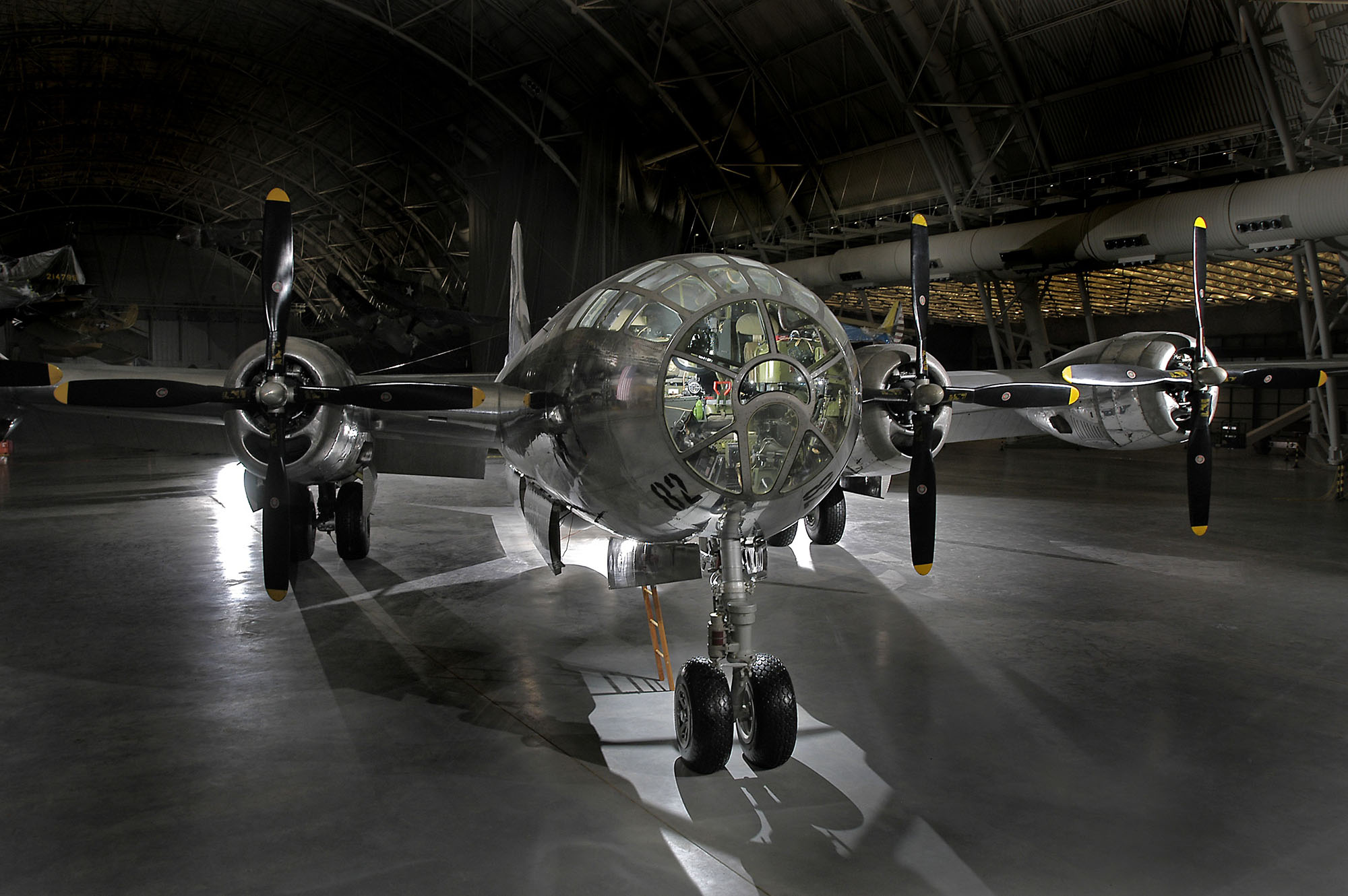
A multi-engine bomber carried a crew whose members performed different jobs in a confined, noisy, and often very cold environment. Pilots, navigators, bombardiers, radio operators, engineers, and gunners depended on one another. Oxygen, communications, heating, and the movement of equipment mattered to survival as well as to the mission. Damage could turn an ordinary procedure into a difficult act of improvisation.
Formation flying added another layer of dependence. Bombers attempted to combine navigation, concentrated bombing, and defensive fire while holding position through changing weather and enemy attacks. Long-range fighter escort altered the balance, but it did not remove antiaircraft fire, mechanical failure, or the consequences of fatigue. Mission reports and surviving equipment reveal both the power of the force and the vulnerability of the people inside it.
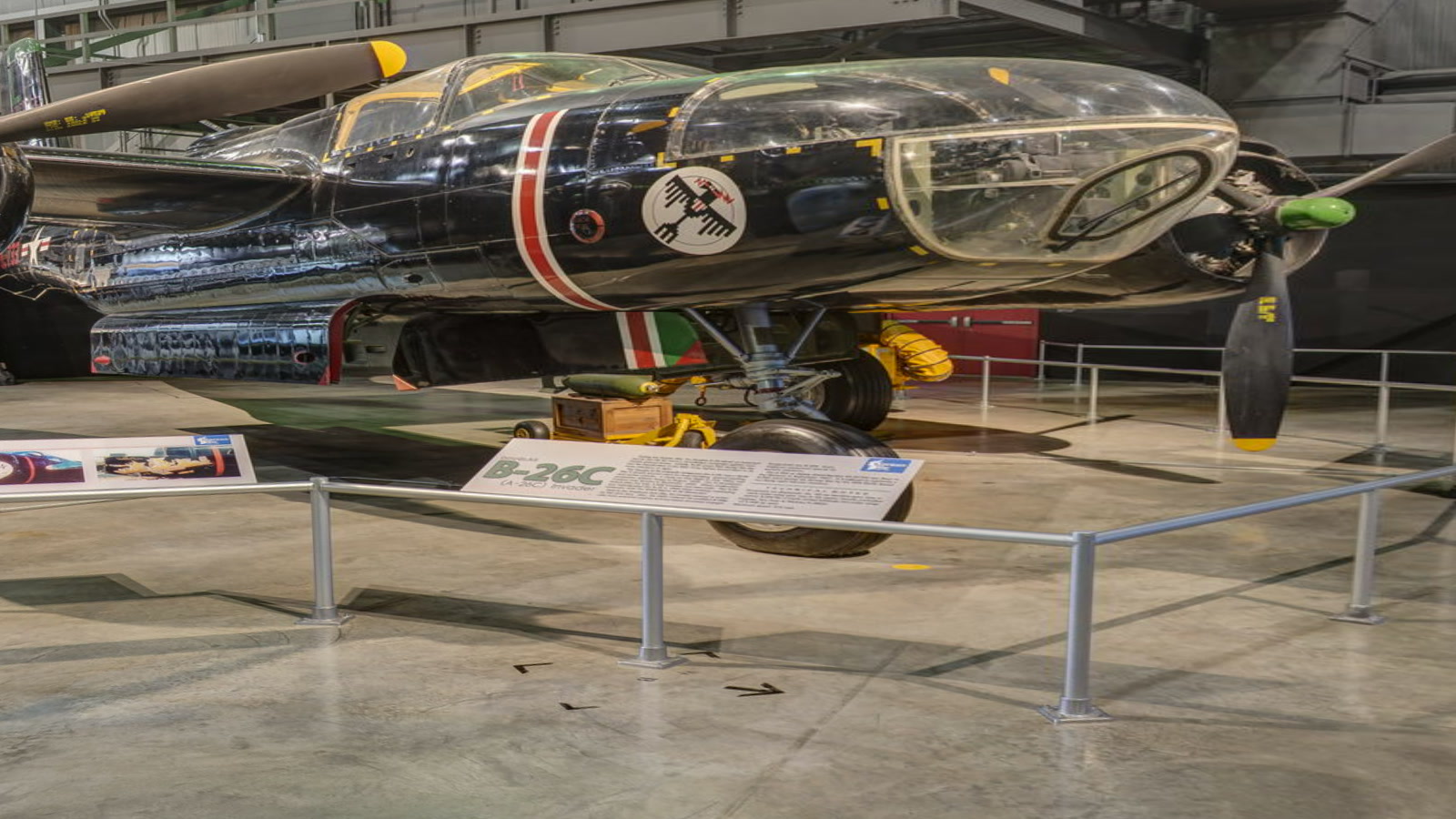
Named aircraft and famous crews offer an entry into this history without representing every experience. Nose art and personal possessions made an industrial machine feel like a shared home, yet many crews and aircraft left little material trace. The museums preserve fragments of that wider world: a turret, a flight jacket, an engine, a decorated aircraft, a story of escape. Linking them across galleries allows the technical history of bombing to be read alongside courage, loss, civilian consequences, and the work required to bring a damaged aircraft and its crew back.