Air Force Museum
B-36 Remote Gun Turret
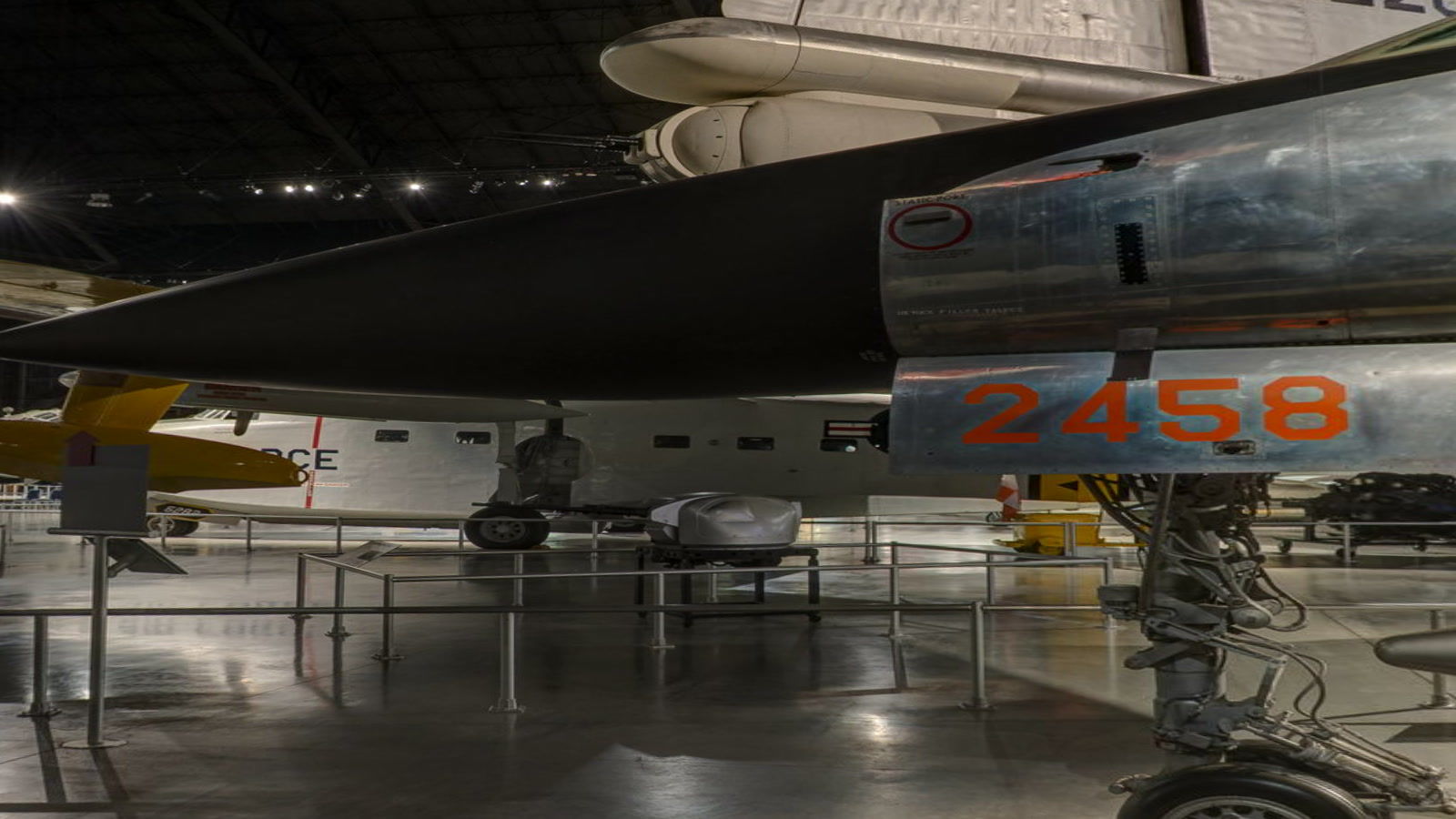
Retractable remote turrets gave early B-36 bombers concentrated defensive fire without permanent drag from exposed gun positions. Gunners aimed twin 20 mm cannon from separate sighting stations. Reliability problems, weight, and the growing value of speed and altitude eventually led the Air Force to remove most guns under the Featherweight program.
In depth
History & service
Early models of the B-36 Peacemaker intercontinental bomber relied on concentrated fire from multiple gun turrets for protection from fighters. This concept had been used in World War II bombers, and the B-36 was the last U.S. bomber to employ massed gun turrets for defense.
Early B-36s had six turrets like the General Electric model on display, which mounts two M24 20mm cannon. Separate gunners operated each turret by remote control in individual sighting stations. When not in use, turrets retracted into the Peacemaker's fuselage to cut wind resistance and save fuel, thus preserving the bomber's great range. A turret in the tail was radar-aimed and nonretractable. The nose also had a nonretractable turret.
Reliability and aiming problems made the gun system troublesome. Finally the B-36 "Featherweight program" removed the heavy guns and protected the aircraft instead with speed, maneuverability and altitude. Only the tail turret remained for protection from the rear. All B-36s eventually were converted to Featherweights.
Details that tell the story
Twin 20 mm cannon in a retractable turret · Aimed remotely from inside the bomber · Most defensive guns were later removed to save weight
A bomber was a workplace under pressure
A multi-engine bomber carried a crew whose members performed different jobs in a confined, noisy, and often very cold environment. Pilots, navigators, bombardiers, radio operators, engineers, and gunners depended on one another. Oxygen, communications, heating, and the movement of equipment mattered to survival as well as to the mission. Damage could turn an ordinary procedure into a difficult act of improvisation.
Formation flying added another layer of dependence. Bombers attempted to combine navigation, concentrated bombing, and defensive fire while holding position through changing weather and enemy attacks. Long-range fighter escort altered the balance, but it did not remove antiaircraft fire, mechanical failure, or the consequences of fatigue. Mission reports and surviving equipment reveal both the power of the force and the vulnerability of the people inside it.
Named aircraft and famous crews offer an entry into this history without representing every experience. Nose art and personal possessions made an industrial machine feel like a shared home, yet many crews and aircraft left little material trace. The museums preserve fragments of that wider world: a turret, a flight jacket, an engine, a decorated aircraft, a story of escape. Linking them across galleries allows the technical history of bombing to be read alongside courage, loss, civilian consequences, and the work required to bring a damaged aircraft and its crew back.