Udvar-Hazy
Boeing B-29 Superfortress Enola Gay
Enola Gay is the B-29 that dropped an atomic bomb on Hiroshima on August 6, 1945. The aircraft connects advanced American wartime engineering with a devastating event in human history. Its story includes the aircrew, the immense wartime production effort, and the civilians who suffered the attack and its aftermath. Understanding this airplane means holding those parts together: a remarkable machine carried a weapon whose consequences extended far beyond the mission itself.
In depth
A bomber built for distance
The B-29 represented a major expansion in the capabilities of American heavy bombers. Pressurized crew spaces, powerful engines, and sophisticated systems supported operations over the immense distances of the Pacific. Designing the aircraft was only part of the undertaking. Airfields, maintenance organizations, trained crews, fuel supplies, and spare parts had to support it far from the factories that built it.
The bomber campaign against Japan used B-29s for conventional bombing, incendiary attacks, and mine laying as well as the two atomic missions. The aircraft type therefore belongs to a broader history of air power and industrial warfare. Enola Gay’s particular role should be distinguished from the many other missions flown by B-29 crews.
August 6, 1945
This Martin-built B-29 dropped the atomic bomb on Hiroshima. Three days later, another B-29, Bockscar, dropped the second atomic bomb on Nagasaki. Enola Gay participated in that later mission as a weather reconnaissance aircraft, while The Great Artiste served as an observation aircraft on both atomic missions.
The attacks killed large numbers of people, overwhelmingly civilians, and left survivors facing burns, injuries, radiation effects, bereavement, and the destruction of their communities. The aircraft’s technical history cannot substitute for those human consequences. Equally, understanding the mission requires examining the wartime decisions and institutions that placed this aircraft over Hiroshima.
The difference between capability and judgment
An enthusiast can examine the B-29’s construction, performance, and crew systems without treating the consequences of its use as a simple engineering success. Technology explains how an operation became possible. Assessing the decision to conduct it requires a wider historical view, including the Pacific war, Japanese and Allied leadership, and the experiences of people on the ground.
Historians continue to examine the relationship among the atomic attacks, Soviet entry into the war against Japan, and Japan’s surrender. A single aircraft cannot settle that debate. It can provide a concrete starting point for reading primary records and considering why interpretations differ.
An object that demands close attention
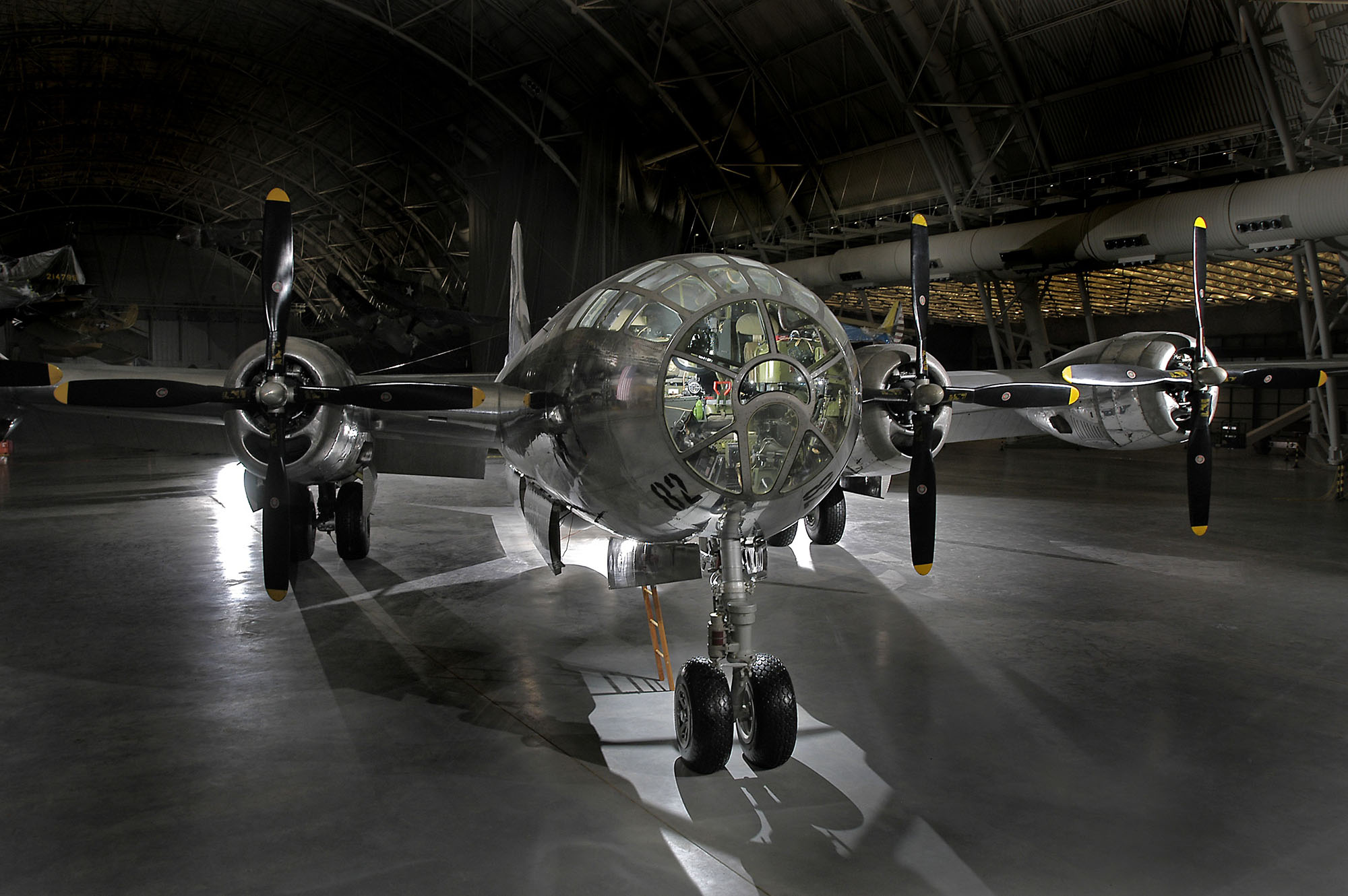
In the panorama, the aircraft’s scale makes the industrial achievement visible. The crew compartments and long fuselage represent an enormous investment of labor and knowledge. The name on the nose identifies one airframe within that vast effort.
The most valuable encounter with Enola Gay is neither a list of specifications nor an uncomplicated victory story. It is an opportunity to consider military service, national decision-making, technological ambition, and human loss together. The connection to Bockscar in the Air Force Museum provides a second surviving aircraft through which to follow the events of August 1945.