Air Force Museum
Col. Neel E. Kearby: Pacific Thunderbolt Ace
Neel Kearby became one of the leading American fighter aces in the Southwest Pacific while flying the P-47 Thunderbolt. Colonel Neel Kearby commanded the 348th Fighter Group and adapted the heavy, long-range P-47 to combat over New Guinea. On October 11, 1943, he was credited with six victories during one mission and received the Medal of Honor.
In depth
The story behind the display
Kearby continued flying combat after exceeding the number of missions normally expected of a senior commander. He was shot down and killed in March 1944.
History & service
Col. Neel E. Kearby, a Medal of Honor recipient, developed aggressive tactics that exploited the strengths of the P-47 Thunderbolt. With 22 victories, he became the highest-scoring Thunderbolt pilot in the Pacific Theater. Moreover, Kearby's tactics as commander of the first P-47 unit in the Pacific Theater led to considerable success for his 348th Fighter Group.
Before it became a proven weapon, many considered the heavy Thunderbolt unsuitable for use against nimble Japanese aircraft. Since the P-47 could not maneuver with the enemy at low altitude, Kearby would lead his group into hostile territory at high altitude where the Thunderbolt's turbosupercharged engine gave it an advantage. Upon sighting the enemy below, Kearby and his pilots made high-speed attacks exploiting the P-47s remarkable diving ability.
The energy built up in the dive allowed them to quickly climb back up to altitude for another diving pass. Japanese pilots came to fear attacks from the 348th Fighter Group because they came with little warning, and the Thunderbolt's eight .50-cal. machine guns literally blew their lightly built aircraft out of the sky.
In November 1943, with 12 victories to his credit, Kearby was transferred to the headquarters of the 5th Air Force Fighter Command. Despite his assignment to administrative duties, Kearby still wanted to be in combat. He flew missions whenever he could, and his victory tally continued to rise.
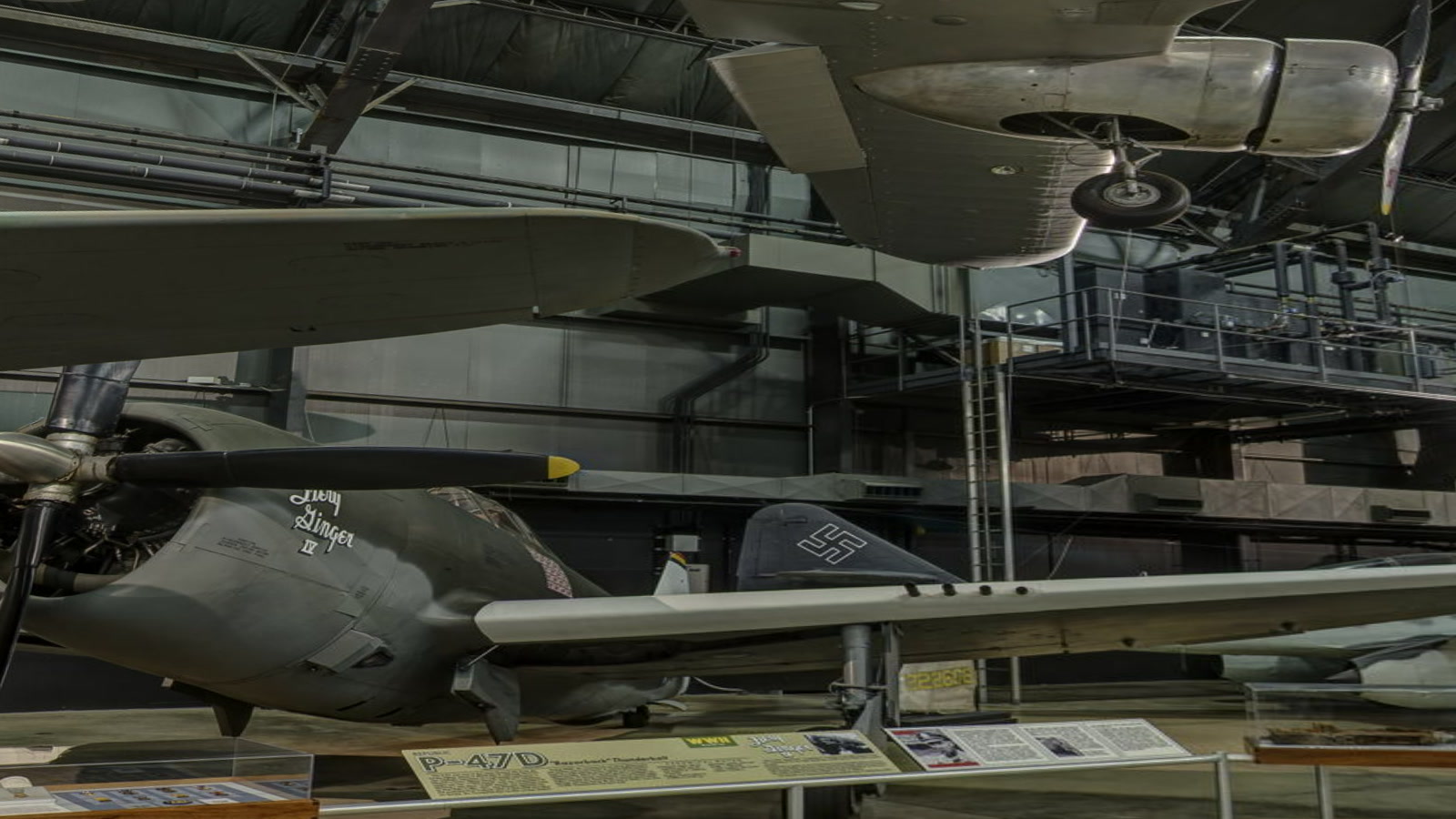
A mission near Wewak on March 5, 1944, was Kearby's last. While attacking a Japanese formation, a Ki-43 "Oscar" fighter pilot momentarily gained position on him. Hit by heavy machine gun fire, his Thunderbolt named Fiery Ginger IV crashed, and Kearby was killed.
Col. Neel E. Kearby, a particularly aggressive fighter pilot and motivating leader, often initiated successful flights against superior numbers. On Oct. 11, 1943, Kearby led three of his pilots against nearly 50 Japanese aircraft near Wewak. Tearing through the enemy formation, Kearby shot down six Japanese aircraft during the engagement. For his skill and daring, Kearby received the Medal of Honor.
The holes in the tail were made by the Japanese fighter that shot Kearby down. After the war, the wreckage of the aircraft lay undisturbed and forgotten until the 1990s. This artifact came to the museum in 2004.
Details that tell the story
Commanded the 348th Fighter Group · Flew the P-47 Thunderbolt · Received the Medal of Honor · Killed in combat in March 1944
Performance was only part of the contest
A fighter's speed, climb, range, visibility, and armament shaped what it could do, but those qualities did not act alone. Training, tactics, warning systems, maintenance, fuel, and the condition of the airfield influenced every encounter. The aircraft that looks best in a table might be at a disadvantage at the wrong altitude, carrying the wrong load, or arriving with too little fuel to remain in the fight.
Escort missions demonstrate the importance of purpose. A fighter defending bombers had responsibilities beyond pursuing an opponent. It needed sufficient range, a useful position, and the discipline to remain with the force it protected. Ground attack imposed different demands, including visibility, endurance near the target, and the ability to survive damage from below.
Comparing aircraft across museums is most rewarding when the mission remains in view. An early pursuit biplane, a wartime piston fighter, and a Cold War jet represent different technologies, but all were part of a larger operational system. Personal accounts reveal how pilots worked within those limits. They also show why claims of individual success need context: weather, surprise, teamwork, and opportunities created by others shaped the outcome. The aircraft provides the physical evidence; the surrounding stories explain how people used it and what that use cost.