Air Force Museum
TM-61A Matador
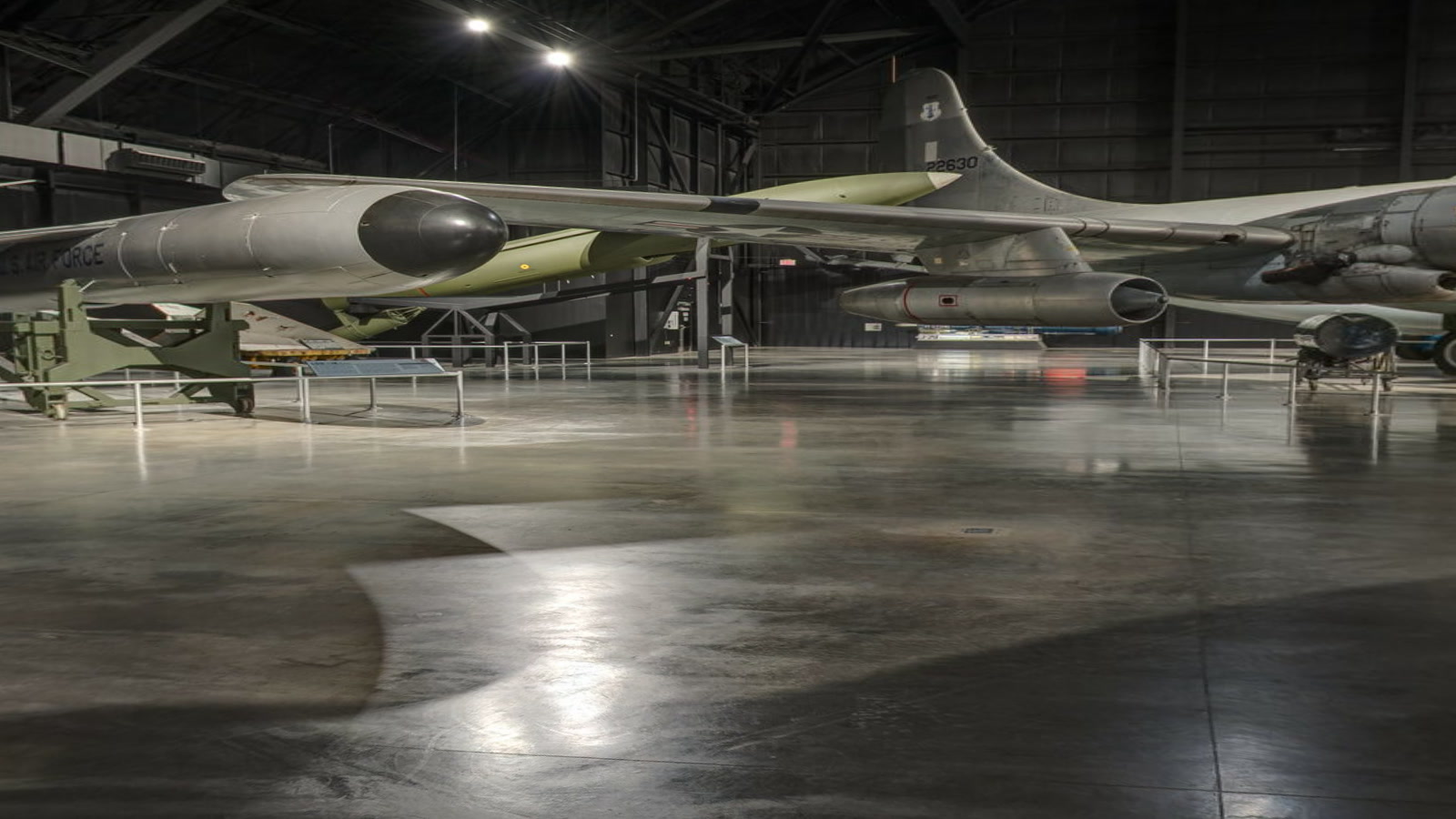
The Matador was the Air Force’s first operational surface-to-surface tactical missile and was initially described as a pilotless bomber. A mobile launcher and ground-control network sent the jet-powered missile toward conventional or nuclear targets. Its limited guidance demanded extensive support, but the program established organizations and practices later missile units refined.
In depth
History & service
As the U.S. Air Force's first pilotless bomber, the Matador used a concept similar to the German V-1 "buzz bomb" of World War II. Originally designated the B-61, the TM-61A surface-to-surface tactical missile carried either a conventional or nuclear warhead. Launched from a mobile 40-foot trailer by a booster rocket that fell away, the Matador continued toward its target powered by a jet engine. Unlike the V-1, however, the Matador was controlled electronically from the ground during flight.
Development of the Matador began in August 1945, and its first launch took place in January 1949. Operational TM-61s became the first tactical guided missiles in the USAF inventory. For test and training purposes, the USAF organized the first Pilotless Bomber Squadron (Light) in October 1951, and the first TM-61 unit deployed overseas to bolster NATO forces in West Germany in March 1954. Matador units also deployed to Korea and Taiwan.
Martin delivered the 1,000th Matador in mid-1957, but in 1959 a phase-out of the Matador began in favor of a more advanced version, the Martin Mace.
Details that tell the story
Entered operational service in the 1950s · Mobile, jet-powered tactical missile · Carried conventional or nuclear warheads
The aircraft in figures
Armament: Conventional or nuclear warhead · Engine: Allison J33 of 4,600 lbs. thrust; Aerojet solid-propellant booster rocket of 57,000 lbs. thrust · Maximum speed: 600 mph in level flight; supersonic during final dive · Range: 690 miles · Span: 27 ft. 11 in. · Length: 39 ft. 8 in. · Height: 9 ft. 8 in. · Weight: 13,593 lbs. at launch
Readiness became a permanent condition
During the Cold War, aviation was organized around the possibility of a conflict that governments hoped to prevent. Bombers, missiles, interceptors, reconnaissance aircraft, warning networks, and tankers became parts of interdependent systems. Their value was judged not only by what they could do in flight, but by how reliably they could be maintained, alerted, launched, supported, and controlled.
This emphasis produced striking aircraft and difficult tradeoffs. Long range demanded fuel and support. High speed increased heat and mechanical stress. Sophisticated electronics offered new capabilities but created new maintenance requirements. A reconnaissance aircraft needed an effective camera and a workable route as well as altitude or speed. An interceptor depended on warning and guidance before its pilot could make an engagement.
The human experience included long periods of training and routine punctuated by crises. Crews and ground personnel practiced procedures whose purpose was to remain credible without being used in war. At the same time, military aviation carried out reconnaissance, transport, rescue, humanitarian missions, and conventional operations around the world. Linking these aircraft with civil airliners, research machines, and spacecraft reveals a history of shared technologies and different purposes. The machines embody technical accomplishment, but also the enormous resources and sustained human effort required to keep a global force ready.