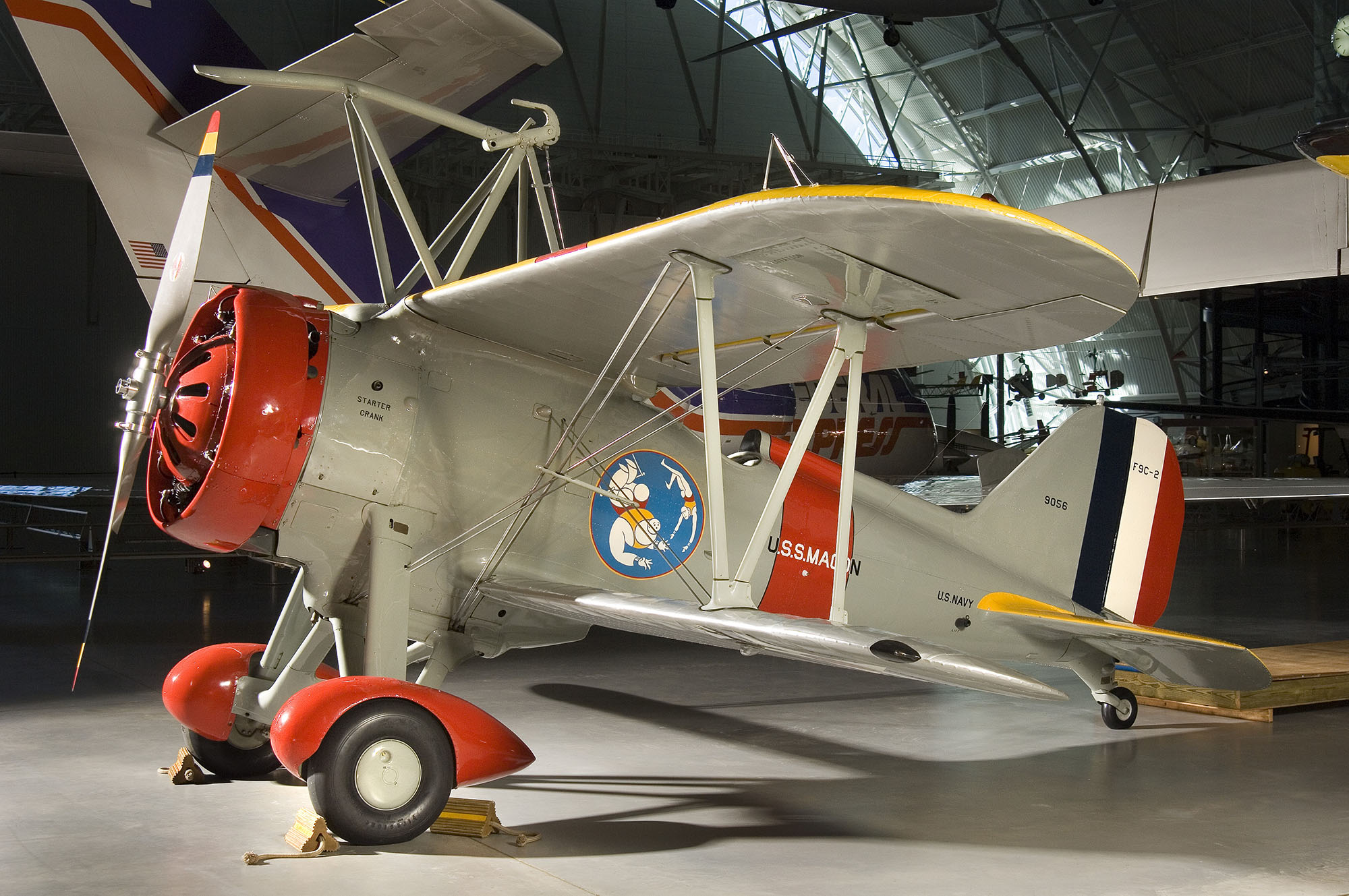
Air Force Museum
Lt. Frank Luke Jr.
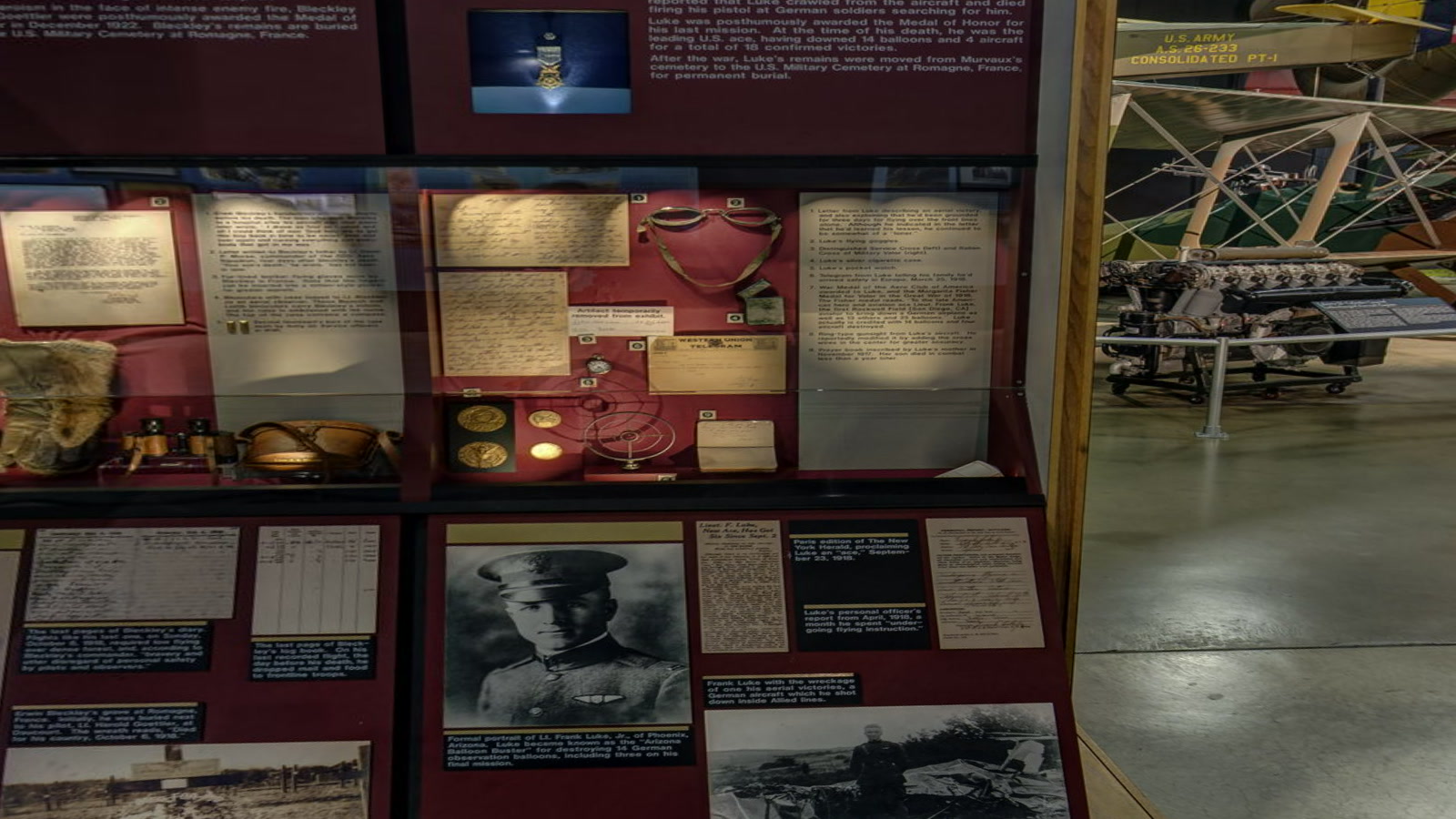
Frank Luke Jr. became known for attacking German observation balloons—valuable targets defended by anti-aircraft guns, machine guns, and fighter patrols. In a short combat career, he was credited with 18 victories, most of them balloons.
In depth
Aggression, targets, and survival
Luke was killed on September 29, 1918, after attacking balloons near Murvaux, France. He received the Medal of Honor for his final mission.
History & service
Frank Luke Jr., nicknamed "The Arizona Balloon Buster," was born in Phoenix, Ariz. He enlisted in the U.S. Army in September 1917, learned to fly and arrived on the front in France in July 1918. Assigned to the 27th Aero Squadron, his exceptional bravery initially earned him a reputation for being "wild and reckless." His fellow pilots soon realized, though, that Luke had a quality that set him apart as a great fighter pilot -- he was completely fearless.
In September 1918, Luke began a personal campaign against German observation balloons and airplanes. In a single week, he scored 13 confirmed victories, including three aircraft and two balloons in one day.
At sunset on Sept. 29, 1918, Lt. Luke took off from a forward aerodrome at Verdun to attack balloons in the Dun-sur-Meuse area. Though pursued by eight aircraft and facing heavy ground fire, he destroyed three balloons and killed six enemy soldiers in strafing attacks near the German-held village of Murvaux. Residents said Luke was wounded in the chest by ground fire while circling low over the village and had landed his SPAD. They reported that Luke crawled from the aircraft and died firing his pistol at German soldiers searching for him.
Luke was posthumously awarded the Medal of Honor for his last mission. At the time of his death, he was the leading U.S. ace, having downed 14 balloons and four aircraft for a total of 18 confirmed victories.
After the war, Luke's remains were moved from Murvaux's cemetery to the U.S. Military Cemetery at Romagne, France, for permanent burial.
Details that tell the story
Served with the 27th Aero Squadron · Credited with 18 victories · Specialized in attacking observation balloons · Killed September 29, 1918
A new invention becomes a public world
Before airplanes became routine transport, public demonstrations helped establish what they could do. Exhibition flights, races, and crossings placed fragile machines before crowds, officials, and potential customers. The audience saw courage and spectacle. Behind the spectacle were less visible questions about reliable engines, controllable wings, suitable landing grounds, and how to recover when the weather changed.
Different configurations competed at the same time. Some designers placed the propeller behind the pilot; others put it at the front. Biplanes used bracing to make light structures sufficiently rigid. Monoplanes reduced some of that external framework but posed their own structural and handling problems. Balloons and dirigibles remained part of the same aviation world, offering capabilities that early airplanes could not simply replace.
The famous firsts matter, but so does the period immediately after them. Flight schools, licensed manufacture, military trials, mechanics, and spare parts carried an invention outward. An aircraft could influence aviation through the pilots trained on it or the designs adapted from it, even after its own performance became outdated. The machines in Washington and Dayton preserve different points along that process. Their differences show how quickly an experimental achievement became an international industry, and how many people had to turn a remarkable flight into a repeatable service.