Air Force Museum
Blunder Trophies
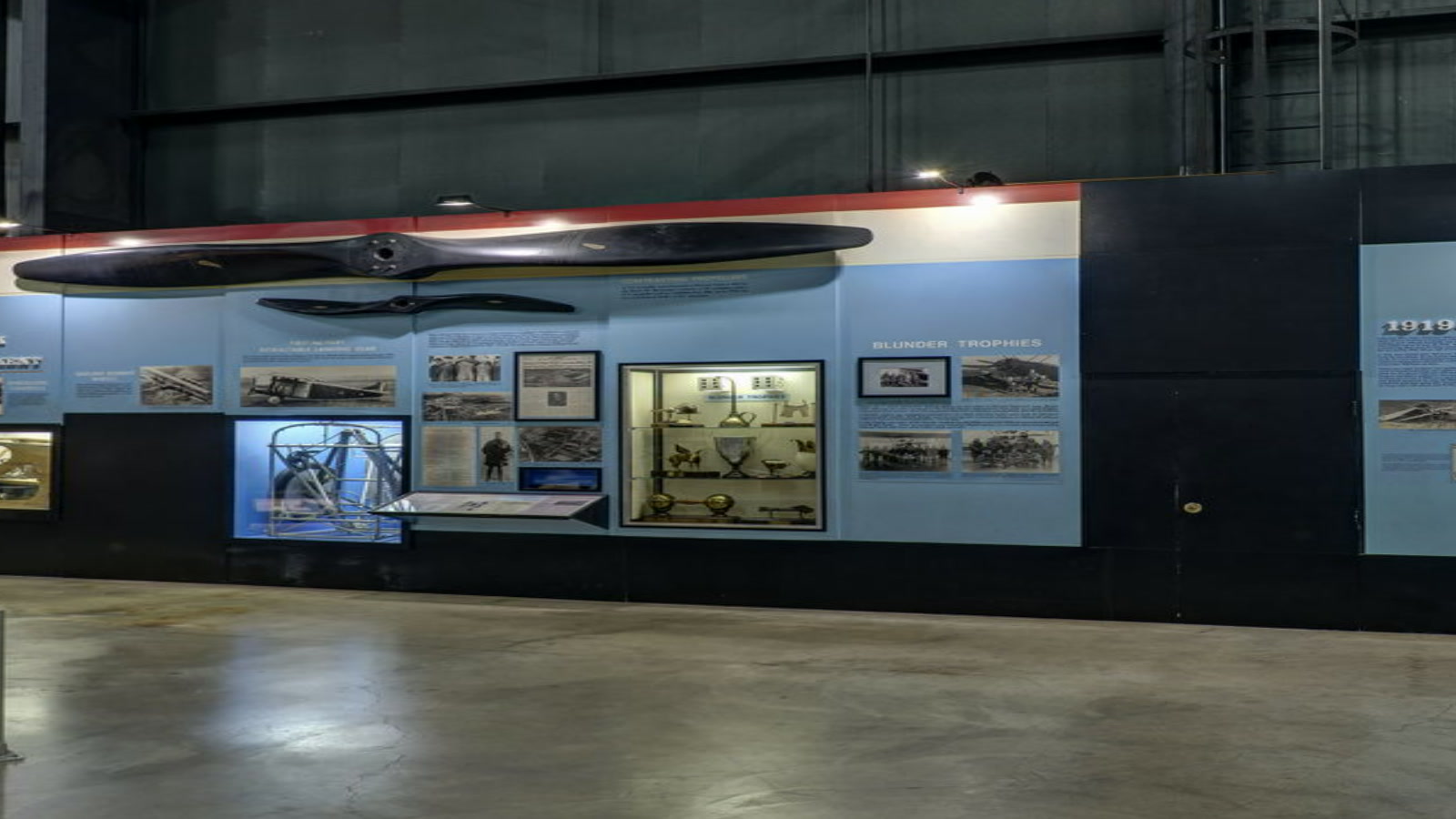
Informal 'blunder' trophies used humor to mark errors, mishaps, or embarrassing decisions within aviation units. They belonged to a culture in which crews repeatedly confronted new equipment, incomplete procedures, and the consequences of small mistakes.
In depth
Humor, accountability, and safety culture
The trophies preserved accounts of operational mishaps through informal awards and squadron humor. They were part of unit life rather than official decorations for military achievement.
History & service
Humor was a virtue not greatly lacking among the test pilots at McCook Field and, later Wright Field. Although the pilots assigned to the Flying Section approached their jobs in a most diligent and professional manner, they still possessed that habit so common among those who fly -- jocularity.
A blunder trophy was created for presentation to a pilot who had made some kind of ridiculous or inexcusable mistake while flying, such as taxiing into a parked airplane or taking off without sufficient fuel and being forced down "out-of-gas."
In this museum display are many of the blunder trophies from the 1920s and early 1930s presented at McCook and Wright Fields. Since the program was not of an official nature, no records were preserved to indicate which pilot won what trophy when and why.
Details that tell the story
Informal awards circulated within aviation communities · Commemorated operational mistakes and mishaps · Associated with squadron humor · Distinct from official military decorations
A new invention becomes a public world
Before airplanes became routine transport, public demonstrations helped establish what they could do. Exhibition flights, races, and crossings placed fragile machines before crowds, officials, and potential customers. The audience saw courage and spectacle. Behind the spectacle were less visible questions about reliable engines, controllable wings, suitable landing grounds, and how to recover when the weather changed.
Different configurations competed at the same time. Some designers placed the propeller behind the pilot; others put it at the front. Biplanes used bracing to make light structures sufficiently rigid. Monoplanes reduced some of that external framework but posed their own structural and handling problems. Balloons and dirigibles remained part of the same aviation world, offering capabilities that early airplanes could not simply replace.
The famous firsts matter, but so does the period immediately after them. Flight schools, licensed manufacture, military trials, mechanics, and spare parts carried an invention outward. An aircraft could influence aviation through the pilots trained on it or the designs adapted from it, even after its own performance became outdated. The machines in Washington and Dayton preserve different points along that process. Their differences show how quickly an experimental achievement became an international industry, and how many people had to turn a remarkable flight into a repeatable service.