Air Force Museum
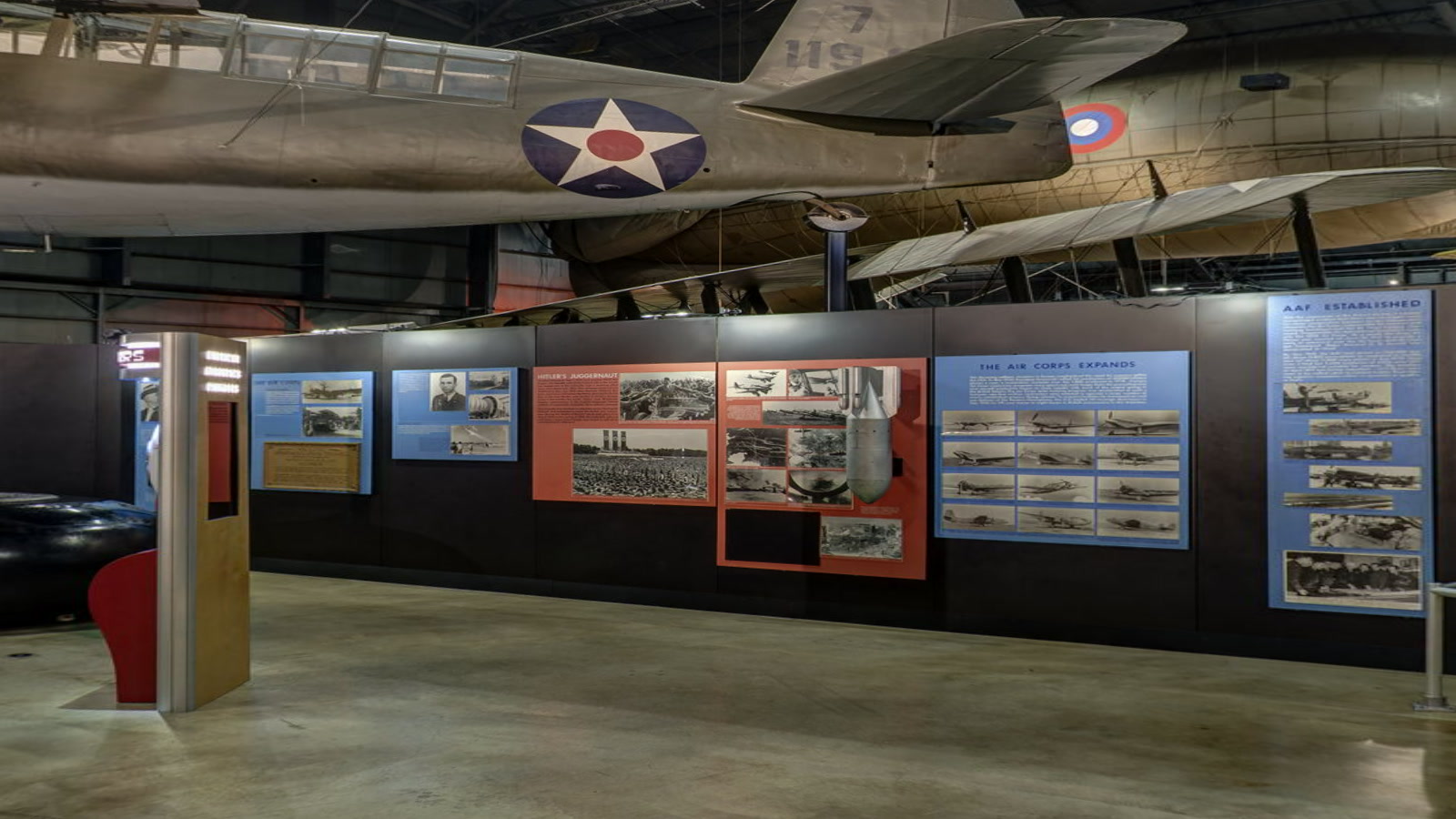
Hitler's Juggernaut
Early German victories joined aircraft, armored forces, artillery, radio communications, and operational surprise. Luftwaffe fighters and bombers did not act alone; they supported and were supported by fast-moving forces on the ground. The same system had limits. Distance, logistics, intelligence, resistance, industrial capacity, and the difficulty of replacing trained crews all mattered. Studying the campaign as a coordinated system avoids both technological determinism and the myth that victory came from one aircraft type.
In depth
Details that tell the story
German operations coordinated air and ground forces · Radio communication increased operational tempo · Aircraft attacked military targets and cities · Logistics and replacement capacity constrained continued operations
A new invention becomes a public world
Before airplanes became routine transport, public demonstrations helped establish what they could do. Exhibition flights, races, and crossings placed fragile machines before crowds, officials, and potential customers. The audience saw courage and spectacle. Behind the spectacle were less visible questions about reliable engines, controllable wings, suitable landing grounds, and how to recover when the weather changed.
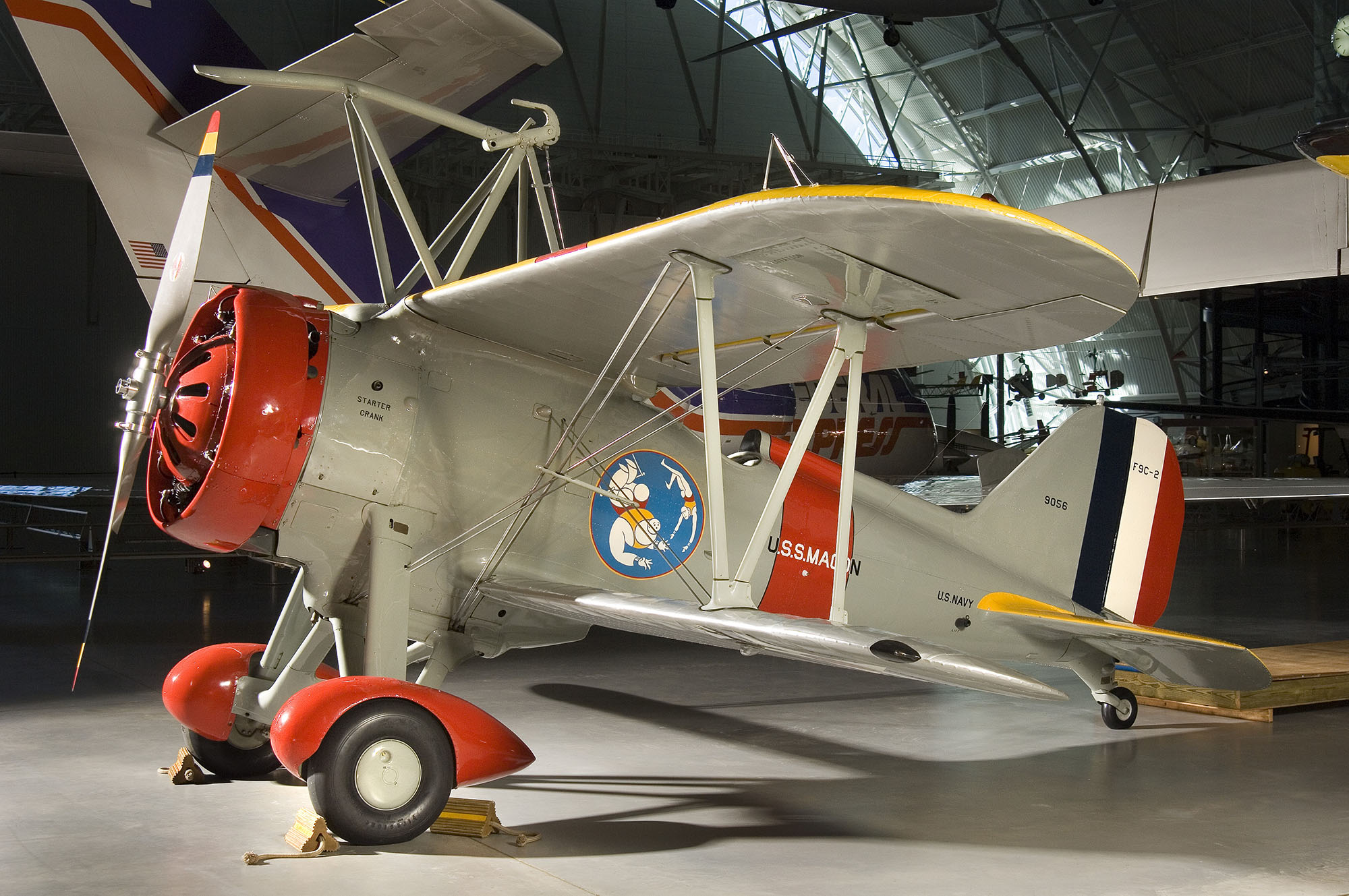
Different configurations competed at the same time. Some designers placed the propeller behind the pilot; others put it at the front. Biplanes used bracing to make light structures sufficiently rigid. Monoplanes reduced some of that external framework but posed their own structural and handling problems. Balloons and dirigibles remained part of the same aviation world, offering capabilities that early airplanes could not simply replace.
The famous firsts matter, but so does the period immediately after them. Flight schools, licensed manufacture, military trials, mechanics, and spare parts carried an invention outward. An aircraft could influence aviation through the pilots trained on it or the designs adapted from it, even after its own performance became outdated. The machines in Washington and Dayton preserve different points along that process. Their differences show how quickly an experimental achievement became an international industry, and how many people had to turn a remarkable flight into a repeatable service.