Air Force Museum
Seversky P-35
The Seversky P-35 was the Army Air Corps' first single-seat fighter with all-metal construction, an enclosed cockpit, and retractable landing gear. The P-35 marked a decisive break from the open-cockpit biplanes that had dominated American pursuit aviation. Its cantilever wing, enclosed cockpit, retractable landing gear, and metal skin brought several modern features together in one operational fighter.
In depth
The story behind the display
Development moved so quickly that the aircraft was outclassed by the time the United States entered World War II. P-35 variants nevertheless fought in the Philippines, where pilots used them against newer Japanese aircraft while coping with damaged bases, scarce parts, and an increasingly desperate defense.
History & service
The P-35, a forerunner of the Republic P-47, was the U.S. Army Air Corps' (USAAC) first production single-seat, all-metal pursuit plane with retractable landing gear and an enclosed cockpit. The USAAC accepted 76 P-35s in 1937-1938, and assigned all but one of them to the 1st Pursuit Group at Selfridge Field, Mich.
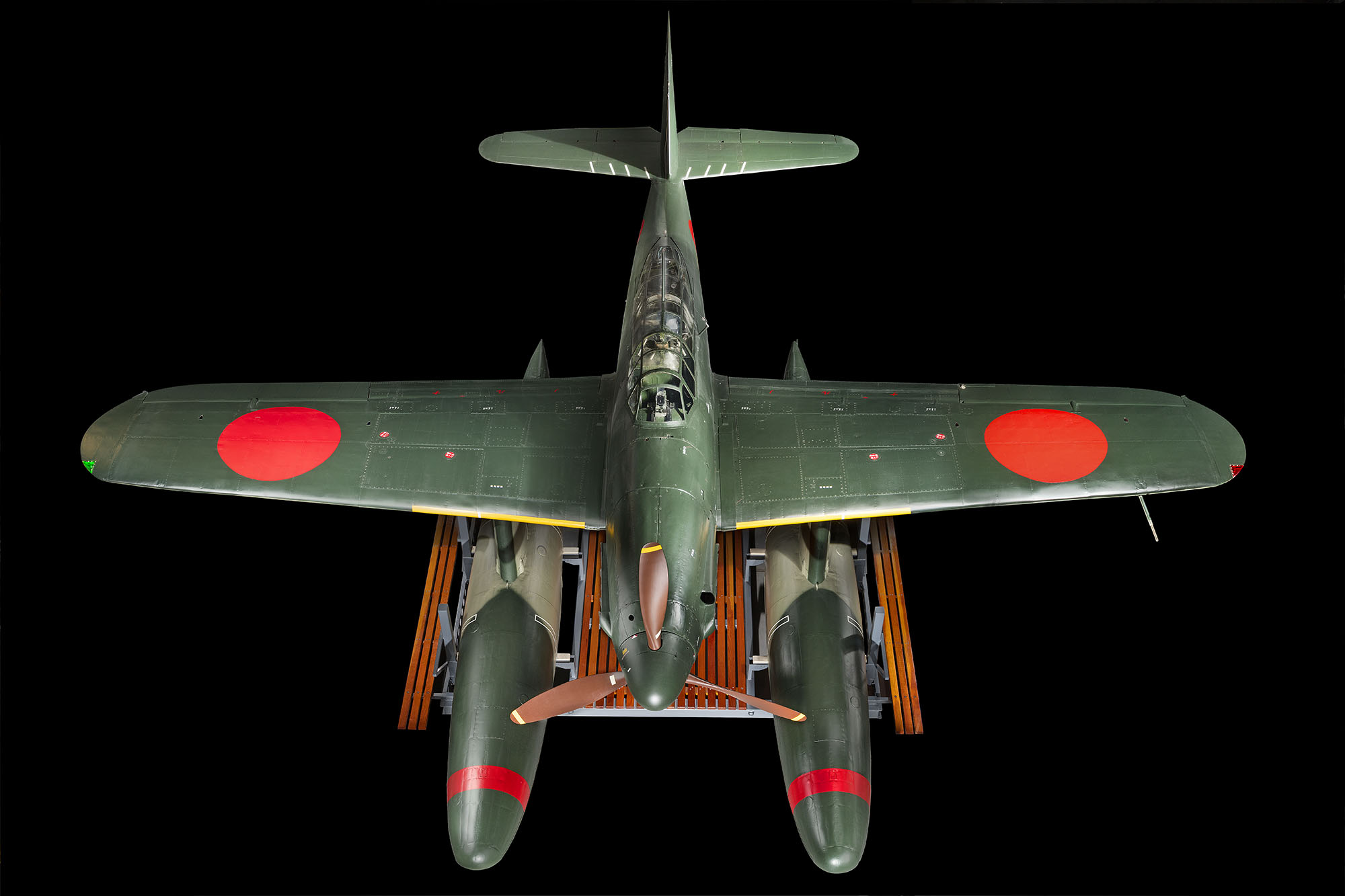
Sweden also purchased 60 improved aircraft (designated EP-106), but the United States diverted a second order for 60 to the USAAC in 1940 and assigned them to the 17th and 20th Pursuit Squadrons in the Philippines. These aircraft, redesignated P-35As, were all lost in action early in the war. Ironically, the Japanese Navy ordered 20 two-seat versions of the P-35 in 1938, and these became the only American-built planes used operationally by the Japanese during World War II.
The aircraft on display, the only known surviving P-35, served with the 94th Pursuit Squadron, 1st Pursuit Group. The aircraft was restored by the 133rd Tactical Airlift Wing, Minnesota Air National Guard, with assistance from students of the Minneapolis Vocational Institute. It is marked as the P-35A flown by the 17th Pursuit Squadron commander, 1st Lt. Buzz Wagner, in the Philippines in the spring of 1941.
Details that tell the story
Entered Army Air Corps service in the late 1930s · All-metal monoplane with retractable landing gear · Developed by the Seversky Aircraft Corporation · Variants served in the defense of the Philippines
The aircraft in figures
Armament: One .50-cal. and one .30-cal. fuselage mounted machine gun plus 320 lbs. of bombs · Engine: Pratt & Whitney R-1830 of 850 hp · Maximum speed: 280 mph · Cruising speed: 260 mph · Range: 625 miles · Ceiling: 30,600 ft. · Span: 36 ft. · Length: 25 ft. 4 in. · Height: 9 ft. 9 1/2 in. · Weight: 5,600 lbs. maximum
Aircraft change the battlefield
In the First World War, aircraft became valuable because they could see beyond the front line. Reconnaissance and artillery observation affected decisions on the ground. Once that information mattered, opposing forces had reason to attack the aircraft gathering it. Fighters, defensive armament, and increasingly specialized missions developed around this contest over observation and freedom of movement.
The aircraft were fragile by later standards, but their crews worked inside a rapidly expanding military system. Training, maintenance, replacement aircraft, photography, communications, and weather reporting supported each sortie. Improvements in engines and armament changed tactics, while the pressures of combat exposed weaknesses that might have taken much longer to discover in peacetime.
Personal stories should be read alongside those systems. A uniform or a named aircraft connects the war to an individual, but the individual depended on many others and operated under constraints that skill could not eliminate. Aircraft from opposing sides show how designers answered similar problems in different ways. The later military collections in Dayton and at Udvar-Hazy reveal what endured: the need to gather information, protect friendly forces, move people and supplies, and coordinate action across distance. The scale changed enormously; the relationship between an aircraft's design and the job it had to perform remained fundamental.