Air Force Museum
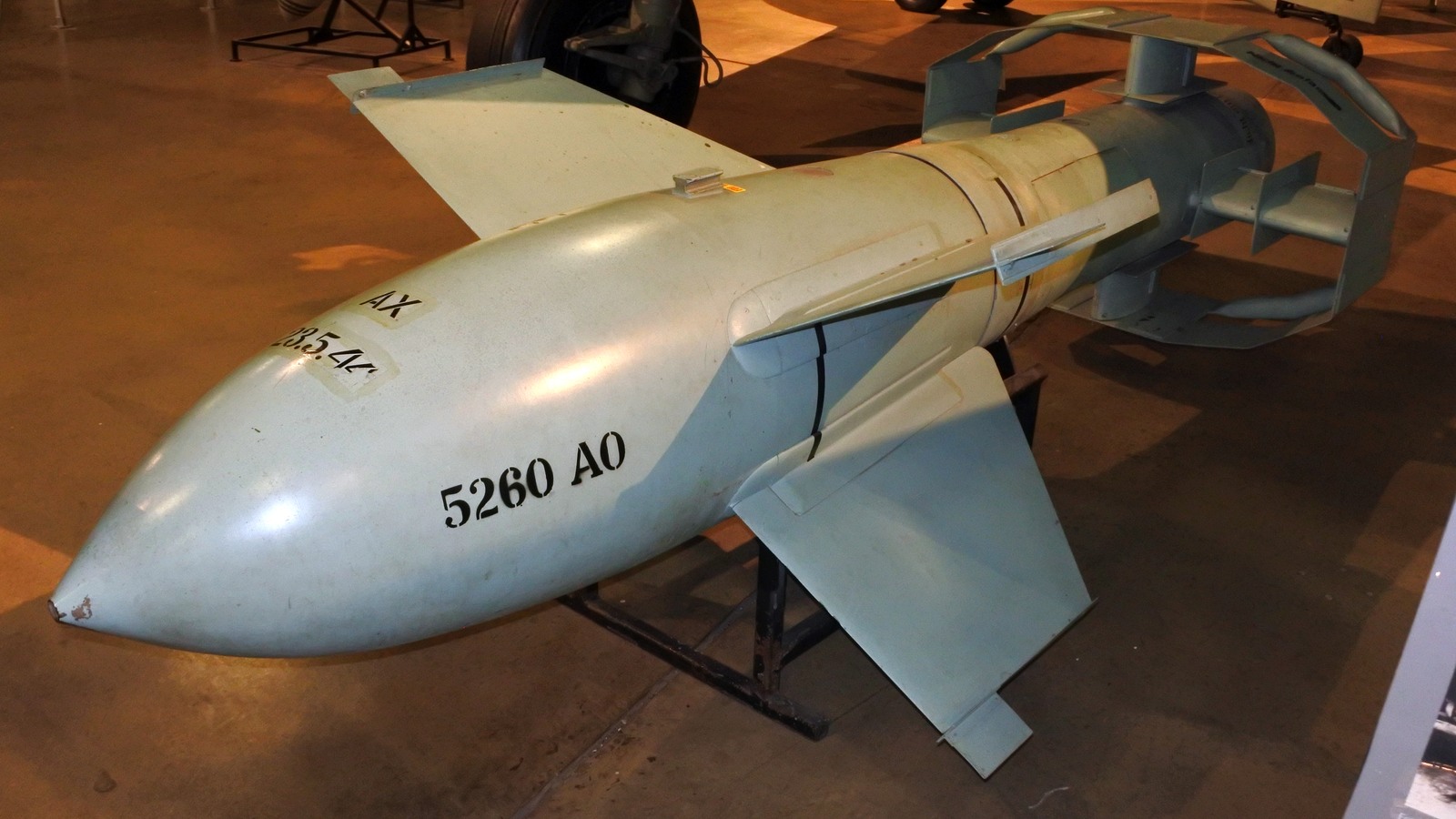
German 'Fritz X' Guided Bomb
The radio-guided Fritz X armor-piercing bomb was an early precision weapon designed to strike heavily protected ships. Released from a bomber at altitude, Fritz X could be steered by an operator who watched flares on the weapon and transmitted course corrections by radio. Its design sought to overcome the difficulty of hitting a moving ship with an unguided bomb.

In depth
The story behind the display
German forces used Fritz X to sink the Italian battleship Roma and damage Allied warships. Its effectiveness encouraged countermeasures such as radio jamming and fighter interception, beginning a recurring contest among guidance, electronic warfare, and air defense.
History & service
The "Fritz X" (or PC 1400 X) was a 3,450-pound armor-piercing bomb fitted with a radio receiver and control surfaces in the tail. It was intended for use against heavily armored ship or ground targets. When dropped from 20,000 feet, an altitude above the most effective anti-aircraft defense, it could penetrate about 28 inches of armor.
Aided by flares in the bomb's tail, the bombardier could follow its fall after release and could send radio signals, which moved the control surfaces and produced minor changes in the bomb's course.
Later operational "Fritz X" bombs were wire-guided instead of radio-controlled to prevent jamming. The first operational use was on Aug. 29, 1943 -- over the Mediterranean -- and the most famous employment of "Fritz X" was the sinking of the Italian battleship Roma off Sardinia on Sept. 9, 1943, to prevent its surrender to the Allies. Between April 1943 and December 1944, about 1,386 of these weapons were produced; 602 were expended in testing and training.
Its combat use was limited by the small number of Luftwaffe aircraft available to carry it and by its relatively poor accuracy, which averaged about 20 percent against Allied shipping.
Details that tell the story
Radio-command-guided glide bomb · Designed for armored naval targets · Used operationally in the Mediterranean · Prompted electronic and tactical countermeasures
Aircraft change the battlefield
In the First World War, aircraft became valuable because they could see beyond the front line. Reconnaissance and artillery observation affected decisions on the ground. Once that information mattered, opposing forces had reason to attack the aircraft gathering it. Fighters, defensive armament, and increasingly specialized missions developed around this contest over observation and freedom of movement.
The aircraft were fragile by later standards, but their crews worked inside a rapidly expanding military system. Training, maintenance, replacement aircraft, photography, communications, and weather reporting supported each sortie. Improvements in engines and armament changed tactics, while the pressures of combat exposed weaknesses that might have taken much longer to discover in peacetime.
Personal stories should be read alongside those systems. A uniform or a named aircraft connects the war to an individual, but the individual depended on many others and operated under constraints that skill could not eliminate. Aircraft from opposing sides show how designers answered similar problems in different ways. The later military collections in Dayton and at Udvar-Hazy reveal what endured: the need to gather information, protect friendly forces, move people and supplies, and coordinate action across distance. The scale changed enormously; the relationship between an aircraft's design and the job it had to perform remained fundamental.