Air Force Museum
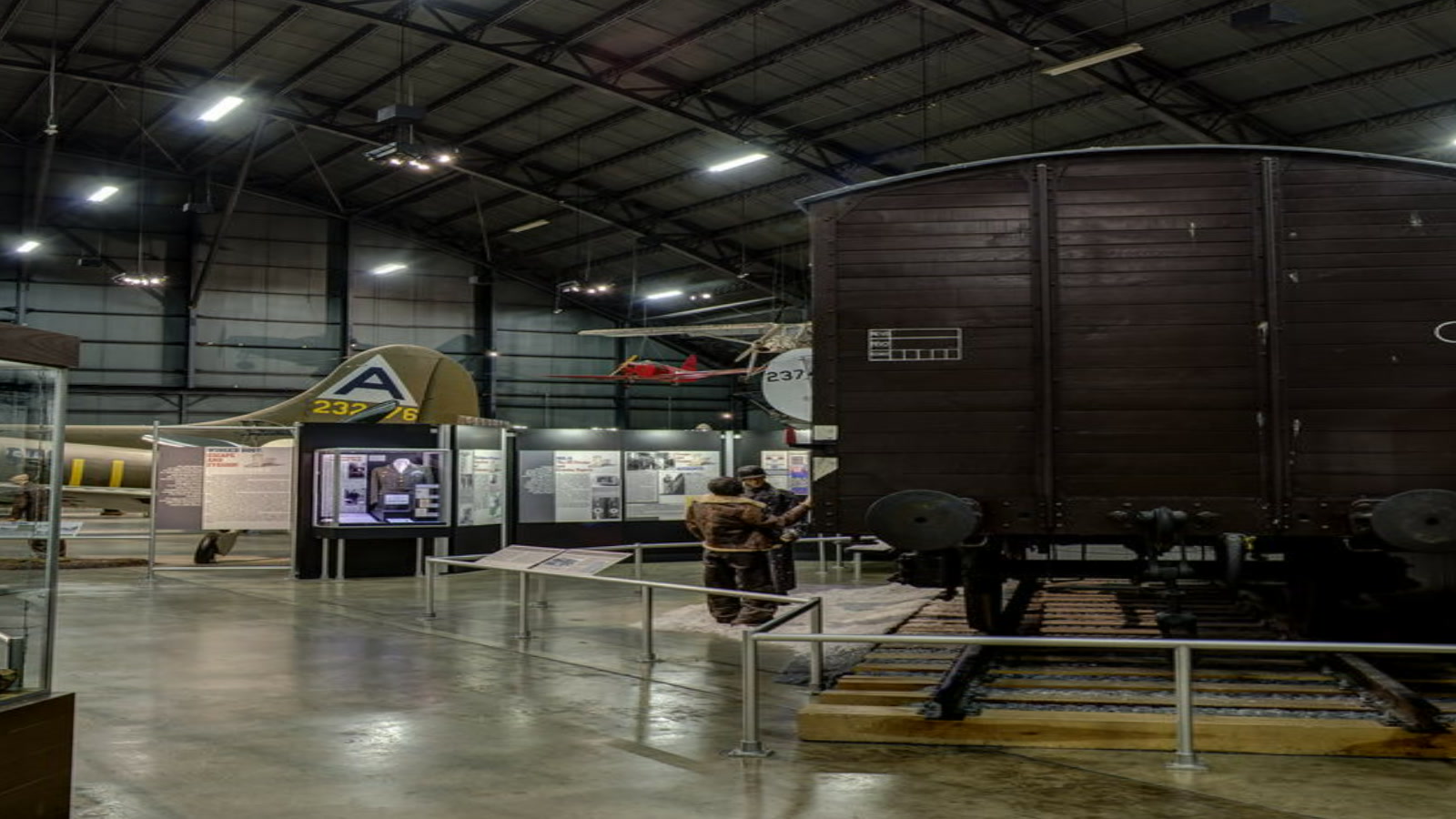
AAF Prisoners of the Japanese
American airmen captured by Japanese forces often faced severe hunger, disease, forced labor, violence, and long separation from their families. Prisoners from the Philippines and other campaigns entered camps across the Japanese empire. Inadequate food and medicine, brutal discipline, transport in unmarked ships, and forced labor caused high death rates.
In depth
The story behind the display
Survivor testimony documents resilience and mutual aid but also the lasting physical and psychological effects of captivity. Their experiences must be understood alongside the suffering of millions of Asian prisoners, laborers, civilians, and military personnel under Japanese occupation.
History & service
Japan was not a signatory of the Geneva Convention and so was not bound to humane treatment of prisoners of war (POWs). Furthermore, surrender to an enemy was unacceptable in Japanese military tradition. Consequently, life in a Japanese POW camp was severe. Food was scarce and of poor quality, brutality was common, and medical and dental services were often nonexistent. Only 2,879 of the 5,436 AAF personnel captured by the Japanese were alive at war's end.
Of the remaining 2,557, 667 had been killed by air bombardment or shot while trying to escape, 43 had died of wounds or injuries received in combat, and 1,847 had died of non-battle causes such as diseases contracted during captivity. Those imprisoned in Japanese POW camps had few possessions and little desire to remember endless days they had spent as POWs. They kept few souvenirs when they were finally liberated by Allied forces. (U.S.
Army and Navy female nurses captured by the Japanese were confined in civilian internee camps rather than POW camps. They endured disease, inadequate food and other hardships, but no apparent brutality.)
Details that tell the story
Many prisoners were captured during early Pacific defeats · Forced labor and inadequate nutrition caused severe illness · Unmarked transport ships exposed prisoners to Allied attack · Survivor accounts became important evidence after the war
Aircraft change the battlefield
In the First World War, aircraft became valuable because they could see beyond the front line. Reconnaissance and artillery observation affected decisions on the ground. Once that information mattered, opposing forces had reason to attack the aircraft gathering it. Fighters, defensive armament, and increasingly specialized missions developed around this contest over observation and freedom of movement.
The aircraft were fragile by later standards, but their crews worked inside a rapidly expanding military system. Training, maintenance, replacement aircraft, photography, communications, and weather reporting supported each sortie. Improvements in engines and armament changed tactics, while the pressures of combat exposed weaknesses that might have taken much longer to discover in peacetime.
Personal stories should be read alongside those systems. A uniform or a named aircraft connects the war to an individual, but the individual depended on many others and operated under constraints that skill could not eliminate. Aircraft from opposing sides show how designers answered similar problems in different ways. The later military collections in Dayton and at Udvar-Hazy reveal what endured: the need to gather information, protect friendly forces, move people and supplies, and coordinate action across distance. The scale changed enormously; the relationship between an aircraft's design and the job it had to perform remained fundamental.