Air Force Museum
Consolidated OA-10 Catalina
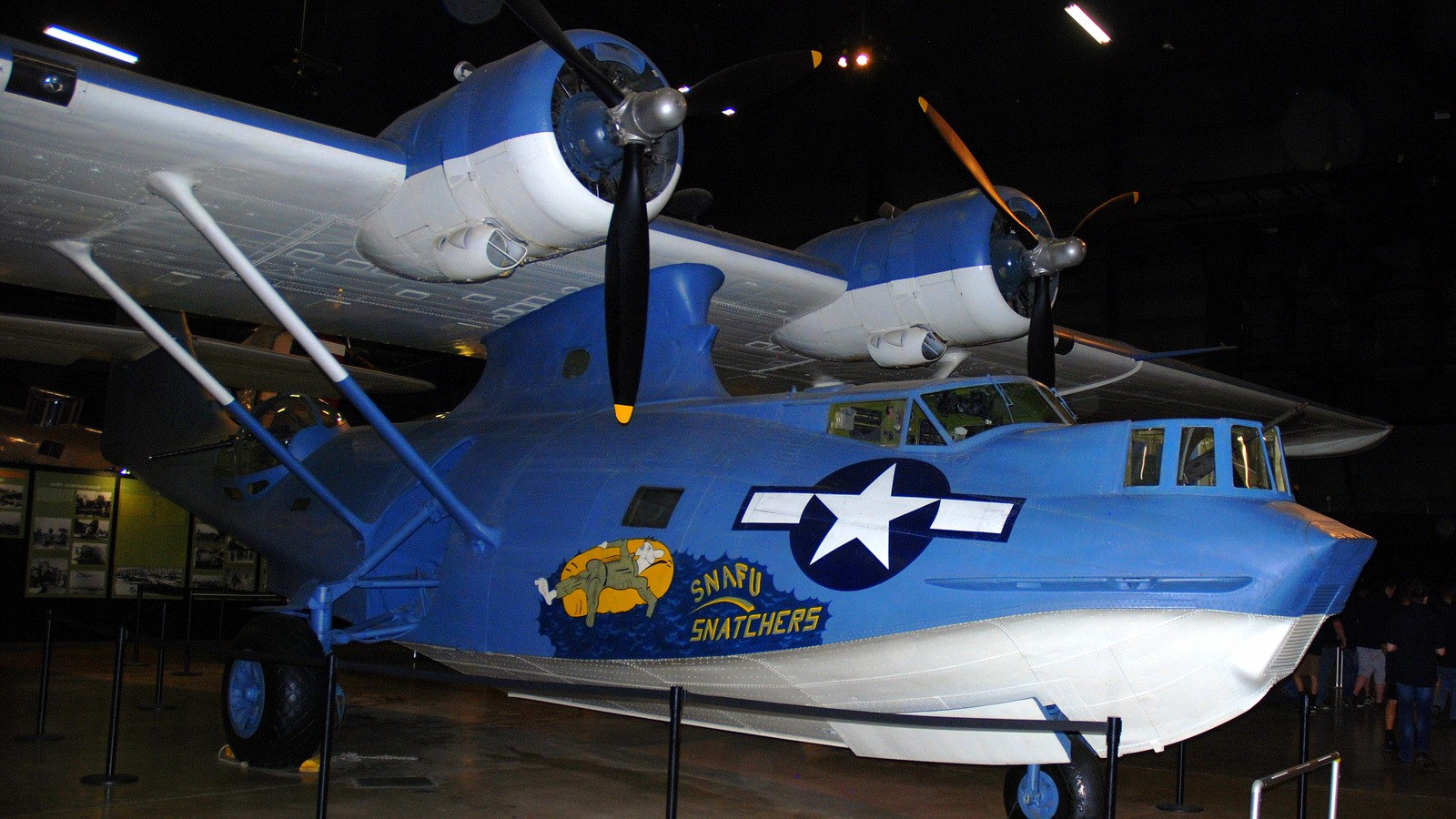
The OA-10 Catalina combined long endurance with the ability to operate from water, supporting patrol, rescue, and transport across the Pacific. The Army Air Forces designation OA-10 applied to versions of the Consolidated Catalina amphibian. Its boat-shaped hull and wing-mounted floats allowed operation from sheltered water where a conventional runway was unavailable.
.jpg)
In depth
The story behind the display
Catalinas searched vast ocean areas, rescued downed airmen, carried personnel and supplies, and worked with naval forces. Their value came from persistence and access rather than speed, making them central to the human story of air-sea rescue.
History & service
The OA-10 was the U.S. Army Air Forces' version of the PBY series flown extensively by the U.S. Navy during World War II. It was a twin-engine, parasol-mounted monoplane equipped with a flying boat hull, retractable tricycle landing gear and retractable wing-tip floats. The OA-10 operated primarily for air-sea rescue work ("DUMBO" missions) with the USAAF's Emergency Rescue Squadrons throughout WWII and for several years thereafter. During the war, OA-10 crews rescued hundreds of downed fliers.
The prototype Catalina first flew on March 28, 1935, and the production version was built in both seaplane and amphibian versions. The Consolidated Aircraft Corp., along with Canadian Vickers Ltd. and the Naval Aircraft Factory, produced nearly 2,500 Catalinas; of these, the USAAF received approximately 380.
The Brazilian Air Force was one of several Allied nations that received Catalinas during the war. It operated this Catalina in a variety of roles in the Amazon Basin until 1981. Flown to the museum in 1984, it was restored and painted as an OA-10A assigned to the 2nd Emergency Rescue Squadron in the Pacific Theater during WWII.
Details that tell the story
Amphibious flying boat · Army Air Forces counterpart to Navy Catalina variants · Used for patrol and air-sea rescue · Long endurance suited operations over the Pacific
The aircraft in figures
Armament: Two .50-cal. machine guns in the waist, two .30-cal. machine guns (one in the bow and another in a rear tunnel), and 8,000 lbs. of bombs · Engines: Two Pratt & Whitney R-1830-92s of 1,200 hp each · Maximum speed: 184 mph · Cruising speed: 120 mph · Range: 2,325 miles · Ceiling: 22,400 ft. · Span: 104 ft. · Length: 63 ft. 10 in. · Height: 20 ft. 1 in. · Weight: 36,400 lbs. loaded
Aircraft change the battlefield
In the First World War, aircraft became valuable because they could see beyond the front line. Reconnaissance and artillery observation affected decisions on the ground. Once that information mattered, opposing forces had reason to attack the aircraft gathering it. Fighters, defensive armament, and increasingly specialized missions developed around this contest over observation and freedom of movement.
The aircraft were fragile by later standards, but their crews worked inside a rapidly expanding military system. Training, maintenance, replacement aircraft, photography, communications, and weather reporting supported each sortie. Improvements in engines and armament changed tactics, while the pressures of combat exposed weaknesses that might have taken much longer to discover in peacetime.
Personal stories should be read alongside those systems. A uniform or a named aircraft connects the war to an individual, but the individual depended on many others and operated under constraints that skill could not eliminate. Aircraft from opposing sides show how designers answered similar problems in different ways. The later military collections in Dayton and at Udvar-Hazy reveal what endured: the need to gather information, protect friendly forces, move people and supplies, and coordinate action across distance. The scale changed enormously; the relationship between an aircraft's design and the job it had to perform remained fundamental.