Air Force Museum
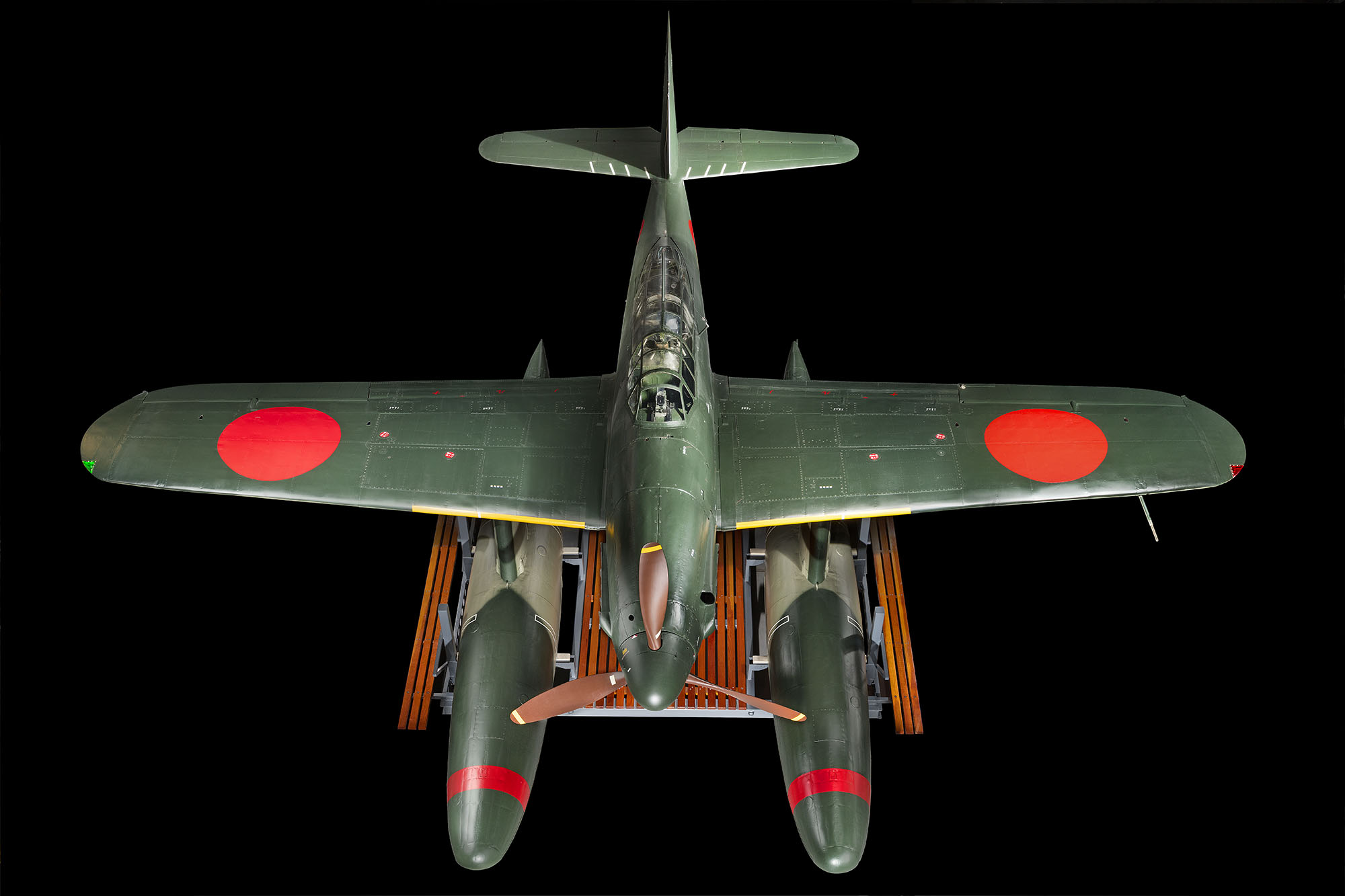
Kawanishi N1K2-Ja Shiden Kai (George)
The N1K2-Ja Shiden Kai (Japanese for "Violet Lightning--Improved") was the best fighter used in significant numbers by the Japanese Navy during World War II. Known by the Allies as the "George," this maneuverable, heavily-armed fighter was a formidable opponent in the closing months of the war.
In depth
History & service
The Shiden Kai was considerably better than the Japanese Navy's most common fighter, the A6M Zero. With a top speed of 369 mph, the N1K2 was about 20 mph faster than the A6M Zero. The heavier Shiden Kai also possessed surprisingly good maneuverability due to a mercury switch that automatically extended the flaps during turns. These "combat" flaps created more lift, thereby allowing tighter turns. Moreover, its four 20 mm automatic cannon provided greatly increased firepower than earlier Japanese designs.
Unlike the A6M Zero, the Shiden Kai could compete against the best late-war U.S. Navy and U.S. Army Air Forces fighters.
The N1K2-Ja was developed to counter high-flying B-29s. It first entered combat early in 1945, and over 400 were produced before the war ended. The Shiden Kai primarily equipped the 343rd Kokutai, a unit composed of the Japanese Navy's best fighter pilots. Commanded by Capt. Minoru Genda, the mastermind of the Pearl Harbor attack, the 343rd Kokutai entered combat in March 1945 in the defense of the Japanese home islands.
Shiden Kai pilots scored several successes against low-flying, carrier-based U.S. Navy fighters. Even so, they did little to stop high-altitude B-29 attacks because of the N1K2's insufficient climbing ability and the considerable loss of horsepower and engine reliability above 21,000 feet. These B-29 raids seriously hindered Shiden Kai production by heavily bombing the plants building the fighter.
The museum's N1K2-Ja is a fighter-bomber variant of the Shiden Kai equipped with wing mounts to carry bombs. It is painted as an aircraft in the Yokosuka Kokutai, an evaluation and test unit similar in function to the USAAF's flight test unit at Wright Field. As a result of Japanese forces being pushed back on the battlefront, by the spring of 1945 Yokosuka Kokutai test pilots entered combat in a desperate defense against overwhelming Allied air attacks.
This aircraft is one of only three surviving restored examples in the world.
The aircraft in figures
Armament: Four Type 99-2 20mm cannon and four 551-lb. bombs · Engine: 1,990 hp Nakajima NK9H Homare · Maximum speed: 369 mph
Aircraft change the battlefield
In the First World War, aircraft became valuable because they could see beyond the front line. Reconnaissance and artillery observation affected decisions on the ground. Once that information mattered, opposing forces had reason to attack the aircraft gathering it. Fighters, defensive armament, and increasingly specialized missions developed around this contest over observation and freedom of movement.
The aircraft were fragile by later standards, but their crews worked inside a rapidly expanding military system. Training, maintenance, replacement aircraft, photography, communications, and weather reporting supported each sortie. Improvements in engines and armament changed tactics, while the pressures of combat exposed weaknesses that might have taken much longer to discover in peacetime.
Personal stories should be read alongside those systems. A uniform or a named aircraft connects the war to an individual, but the individual depended on many others and operated under constraints that skill could not eliminate. Aircraft from opposing sides show how designers answered similar problems in different ways. The later military collections in Dayton and at Udvar-Hazy reveal what endured: the need to gather information, protect friendly forces, move people and supplies, and coordinate action across distance. The scale changed enormously; the relationship between an aircraft's design and the job it had to perform remained fundamental.