Air Force Museum
War on the Asian Mainland
The air war on the Asian mainland stretched across China, Burma, India, and Southeast Asia, linking local resistance with global strategy and difficult supply routes. Chinese forces had resisted Japanese invasion since 1937. After the United States entered the war, Allied air operations expanded from India and China to attack shipping, transportation, airfields, and military positions while supporting ground campaigns.
In depth
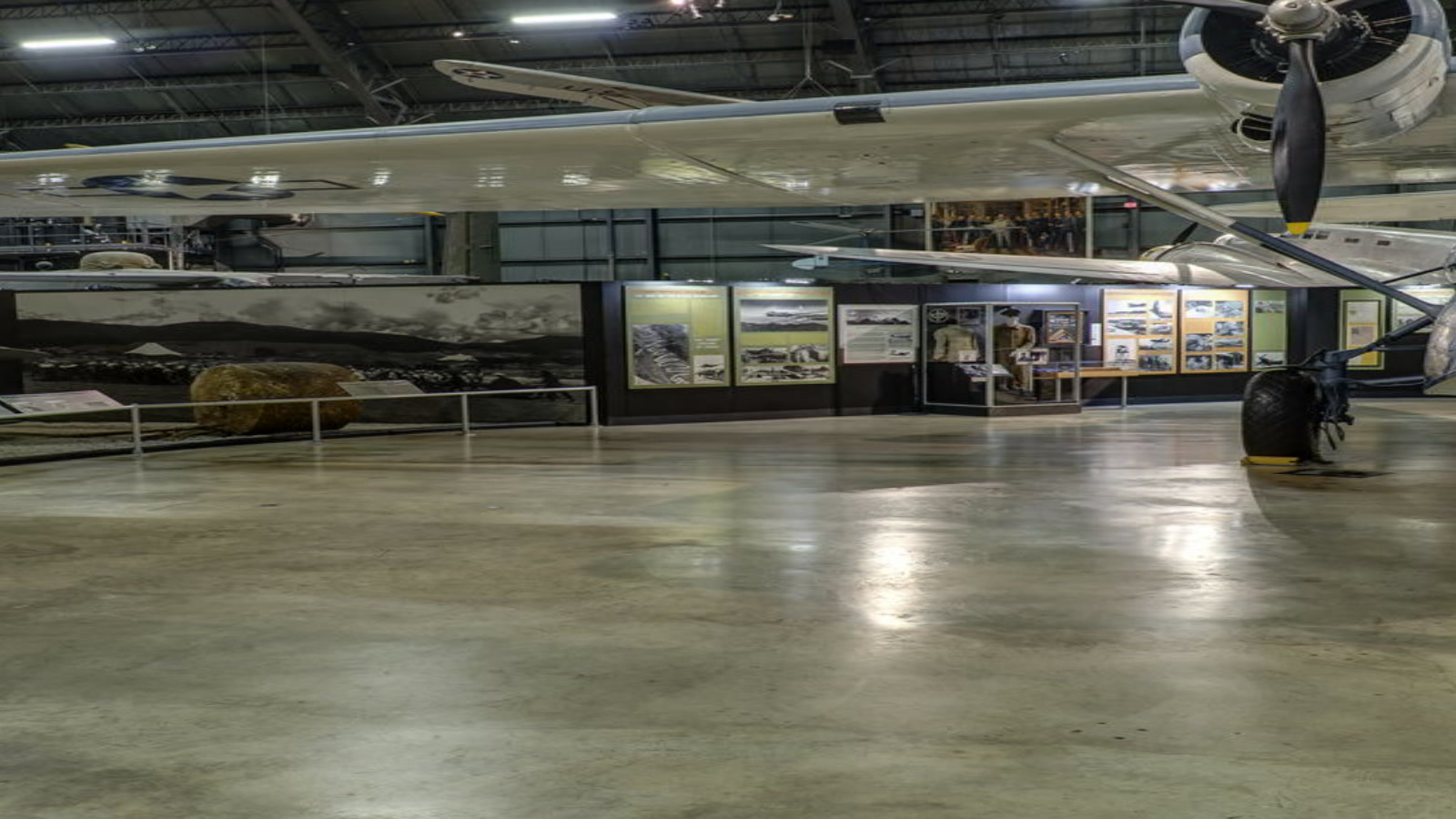
The story behind the display
Mountains, monsoon weather, long distances, limited roads, and competing political goals shaped every operation. The theater reveals a war fought through multinational coalitions and sustained by Chinese, Indian, Burmese, American, British, and other military and civilian labor.
History & service
Until late in the war, operations against the enemy on the Asian mainland in the China-Burma-India (CBI) Theater, were hindered by a tangled chain of Allied command, the long distance from sources of resupply and the very low priority of men and material given to the theater. The primary purpose of the Allied efforts in the CBI Theater was to hold the Japanese in check while achieving victory elsewhere.
During the enemy's rapid advance through Burma, Allied combat airpower consisted of a meager force of British Royal Air Force units, the American Volunteer Group (Flying Tigers) and fewer than a dozen USAAF B-17s and LB-30s (export version of the B-24) assigned to the newly created 10th Air Force. A trickle of reinforcements arrived from the U.S., and AAF bombers succeeded in flying a few bombing missions against the enemy, but they were unable to halt the Japanese advance.
As Allied defenses crumbled in Burma, AAF transport crews aided in the evacuation of personnel and dropped supplies to the remnants of Lt. Gen. Joseph Stilwell's command as they retreated on foot. In June all of the 10th Air Force's bombers were transferred to Africa to bolster defenses there, temporarily leaving the AAF in India without a single operating combat unit.
Details that tell the story
China had been at war with Japan since 1937 · Allied supply routes crossed mountains and contested territory · Air transport supplemented inadequate land routes · Coalition strategy joined many governments and local communities
Aircraft change the battlefield
In the First World War, aircraft became valuable because they could see beyond the front line. Reconnaissance and artillery observation affected decisions on the ground. Once that information mattered, opposing forces had reason to attack the aircraft gathering it. Fighters, defensive armament, and increasingly specialized missions developed around this contest over observation and freedom of movement.
The aircraft were fragile by later standards, but their crews worked inside a rapidly expanding military system. Training, maintenance, replacement aircraft, photography, communications, and weather reporting supported each sortie. Improvements in engines and armament changed tactics, while the pressures of combat exposed weaknesses that might have taken much longer to discover in peacetime.
Personal stories should be read alongside those systems. A uniform or a named aircraft connects the war to an individual, but the individual depended on many others and operated under constraints that skill could not eliminate. Aircraft from opposing sides show how designers answered similar problems in different ways. The later military collections in Dayton and at Udvar-Hazy reveal what endured: the need to gather information, protect friendly forces, move people and supplies, and coordinate action across distance. The scale changed enormously; the relationship between an aircraft's design and the job it had to perform remained fundamental.