National Mall
Douglas DC-7
The DC-7 could fly nonstop between New York and Los Angeles in either direction. Its powerful piston engines made it fast, but jet airliners soon made this advanced design obsolete. The DC-7 pushed piston-airliner range and speed by combining a refined airframe with powerful Turbo Compound engines. High performance came with mechanical complexity and demanding maintenance.
In depth
The peak of one technology
The DC-7 represents a performance maximum reached just before turbine transports changed airline economics. Its rapid obsolescence illustrates how a superior product within one architecture can lose to a different architecture.
Making distance ordinary
An airliner is only the most visible part of an airline. A scheduled journey also depends on weather reports, navigation, trained crews, maintenance, passenger handling, and an airport at each end. Early commercial aircraft had to prove that this whole arrangement could work often enough for people and businesses to rely on it. Carrying mail helped sustain routes while passenger service developed.
Cabin design and operating economics shaped one another. More seats could spread costs across more passengers, but the aircraft still needed enough range and performance for its routes. Enclosed cabins, better engines, improved navigation, and later pressurization made travel more comfortable and more predictable. The move to jets and then wide-body aircraft expanded what airlines could offer, while also requiring larger airports and more extensive support systems.
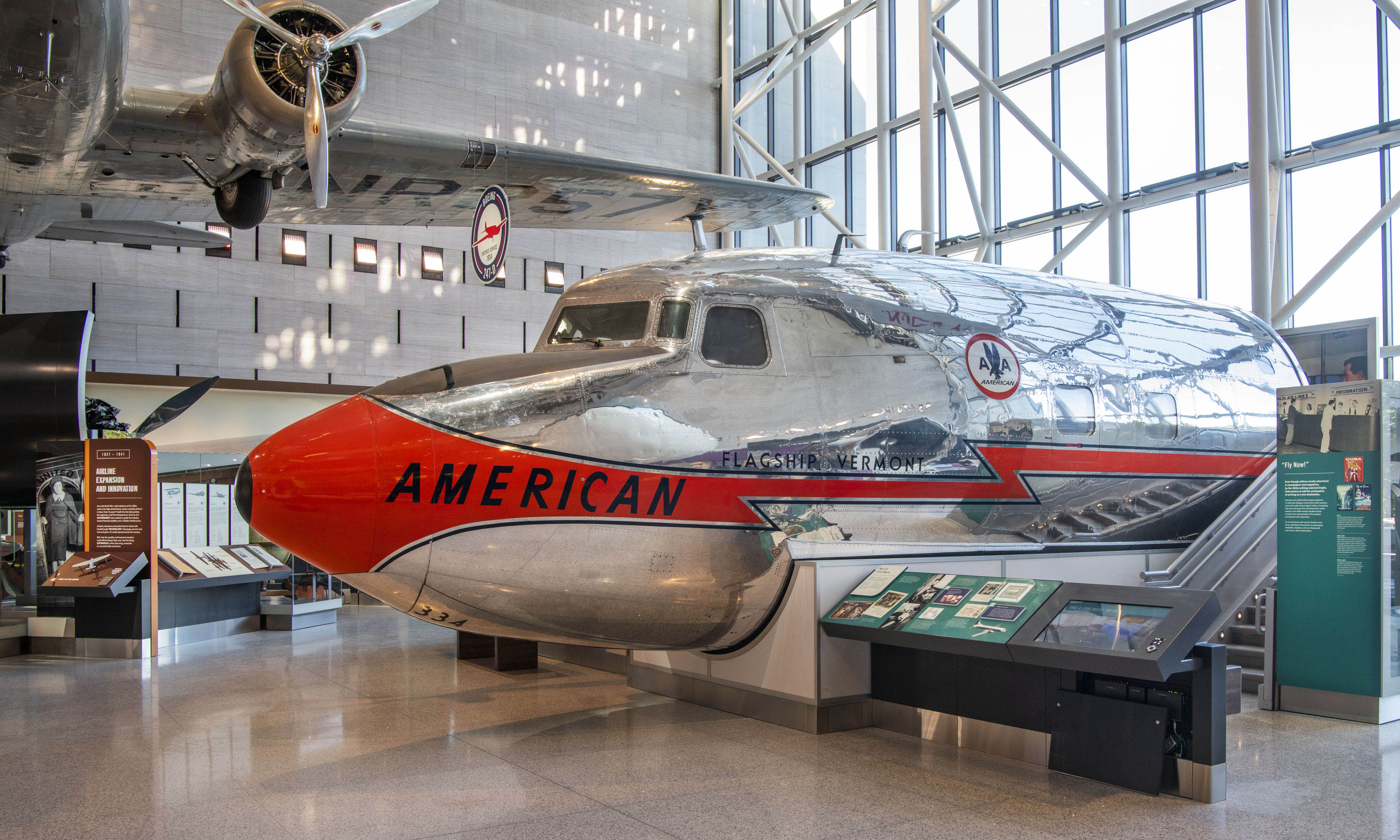
The aircraft in these galleries preserve that growth at different scales. Small utility transports served places that a large airliner could not reach. The DC-3 connected commercial practicality with a design that also became a military workhorse. Later aircraft carried far more people across oceans and continents. Following those connections avoids treating airline history as a contest to build the biggest machine. Its deeper achievement was to make an exceptional experience into an ordinary expectation: depart at a published time, reach a distant city, and return home.