National Mall
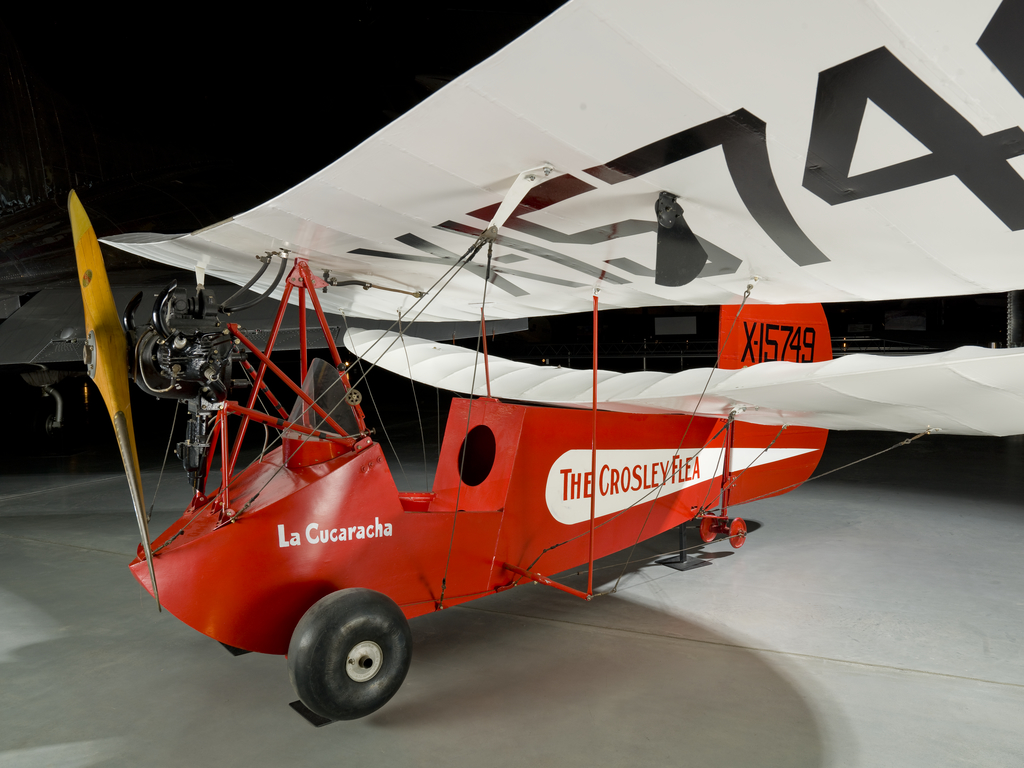
Mignet-Crosley HM.14 Pou du Ciel
Henri Mignet designed the Flying Flea so an amateur could build it and learn to fly. Its unusual two-wing arrangement shows an attempt to make flight simpler and safer for ordinary people. The HM.14 promised affordable, homebuilt flight through fewer controls and straightforward construction. Its history also demonstrates why new configurations need systematic testing across a full range of flight conditions.
In depth
Simple to build is not the same as simple to validate
The Flying Flea movement connected open plans, popular enthusiasm, and the ideal of self-reliance. It also exposed the tension between rapid technological participation and the evidence required for airworthiness.
Aviation close to everyday life
Most flying does not take place in a large scheduled airliner. General aviation includes personal travel, instruction, business transport, surveying, agricultural work, medical missions, and many other uses. These activities share airspace, but their aircraft can be very different. A short rough landing strip, a modest operating budget, or a specialized payload may be more important than high speed.
Small aircraft make the relationship between pilot and machine especially visible. Weight, balance, weather, and fuel planning have immediate consequences. Straightforward designs can be useful precisely because they are manageable to maintain and operate. More elaborate equipment can expand capability, but it also adds cost, training requirements, and new systems to understand.
The personal artifacts in this gallery widen the story beyond aircraft specifications. Clothing, equipment, and accounts of individual flights reveal ambition, work, ingenuity, and the barriers people encountered. The same airplane might be a livelihood for one person, an instrument of public service for another, and a route into a lifelong enthusiasm for a third. Connections to military liaison aircraft, air-rescue machines, and commercial transports show how ideas move across categories. Aviation's importance lies as much in useful daily service as in the famous firsts that attract headlines.