Explore the gallery
Eighteen panoramic stops preserve the visual density of the exhibition and let visitors choose their own route through banners, photographs, listening stations, archives, and community-made art.
Grades 7–12 · Civic and historical inquiry
An eighteen-stop panoramic exhibition carrying a living history of community power beyond the gallery walls.
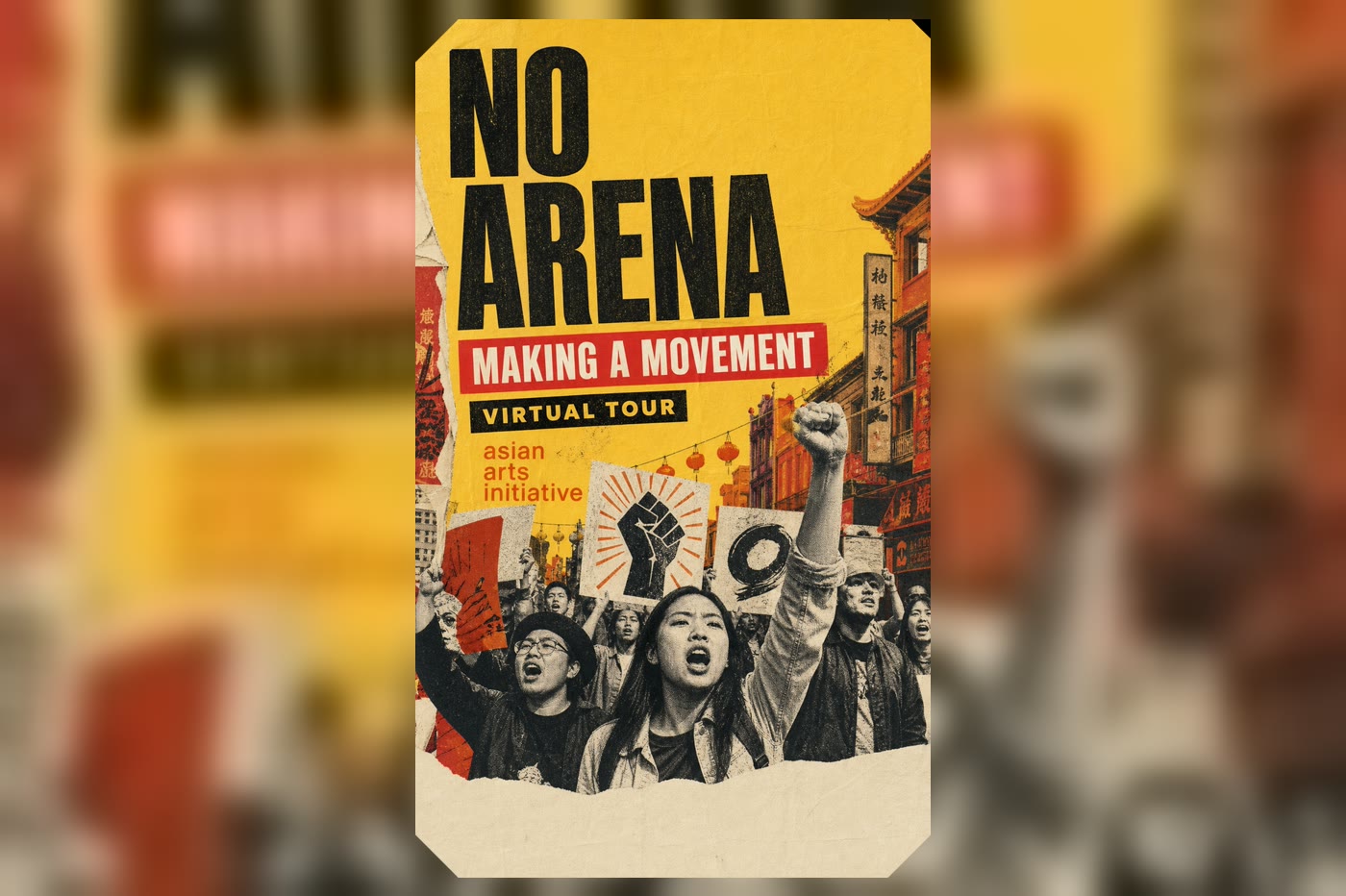
The digital exhibition
“No Arena: Making a Movement” documented the decentralized, people-led coalition that opposed the proposed 76 Place arena near Philadelphia’s Chinatown. The physical exhibition brought together archival material, audio, firsthand accounts, campaign art, and the tactics that turned many individual actions into a citywide movement.
The digital experience treats the gallery as an explorable story, not a slideshow. Visitors can move spatially, follow a curated eighteen-stop route, enlarge the movement’s community collage, or use a dedicated accessible text-and-image companion experience.
Enter the experience
Drag or swipe to look around. Use the story, listening, video, and “look closer” controls to move deeper into the exhibition.
Open full screenPrefer a linear, text-and-image experience? Open the accessible exhibition tour.
One exhibition, multiple depths
Eighteen panoramic stops preserve the visual density of the exhibition and let visitors choose their own route through banners, photographs, listening stations, archives, and community-made art.
Story, audio, video, and gigapixel layers let a visitor move from the room-scale experience into the people, artifacts, and firsthand accounts that give the movement its meaning.
A dedicated text-and-image route provides visual descriptions, adjustable type, high contrast, keyboard support, and direct links back into the panoramic exhibition.
Inquiry route
Begin with a compelling question: how do communities preserve identity, organize collective action, and shape the future of a neighborhood? Analyze posters, photographs, oral histories, and objects; compare perspectives; then create a sourced interpretation or a local-history response of your own.
Curriculum connections include the C3 Inquiry Arc, CCSS ELA-Literacy RH.6–8.1 and RH.6–8.7, and National Core Arts Standards for responding to visual work and connecting it to cultural context.