
Natural History
Museums · Exhibitions · Research · Historic places
Portfolio records of natural history, air and space, art and culture, research collections, gardens, and historic buildings. Browse the work by subject, place, or exhibition.



Subject index
Each subject opens a filtered view of the complete index. Records retain their museum, exhibition, property, and restoration status.
24 live · 1 in restorationNatural HistoryFossils, oceans, human origins, gems, biodiversity, and the living world.Explore subject 14 liveAir & SpaceFlight, exploration, engineering, planetary science, and human ambition.Explore subject 10 liveArt & CultureArt, memory, design, community voices, gardens, and material culture.Explore subject  6 liveResearch & CollectionsWet collections, conservation, marine research, and work behind the scenes.Explore subject 3 liveHistoric PlacesArchitecture, institutional history, and spaces that hold the record.Explore subject
 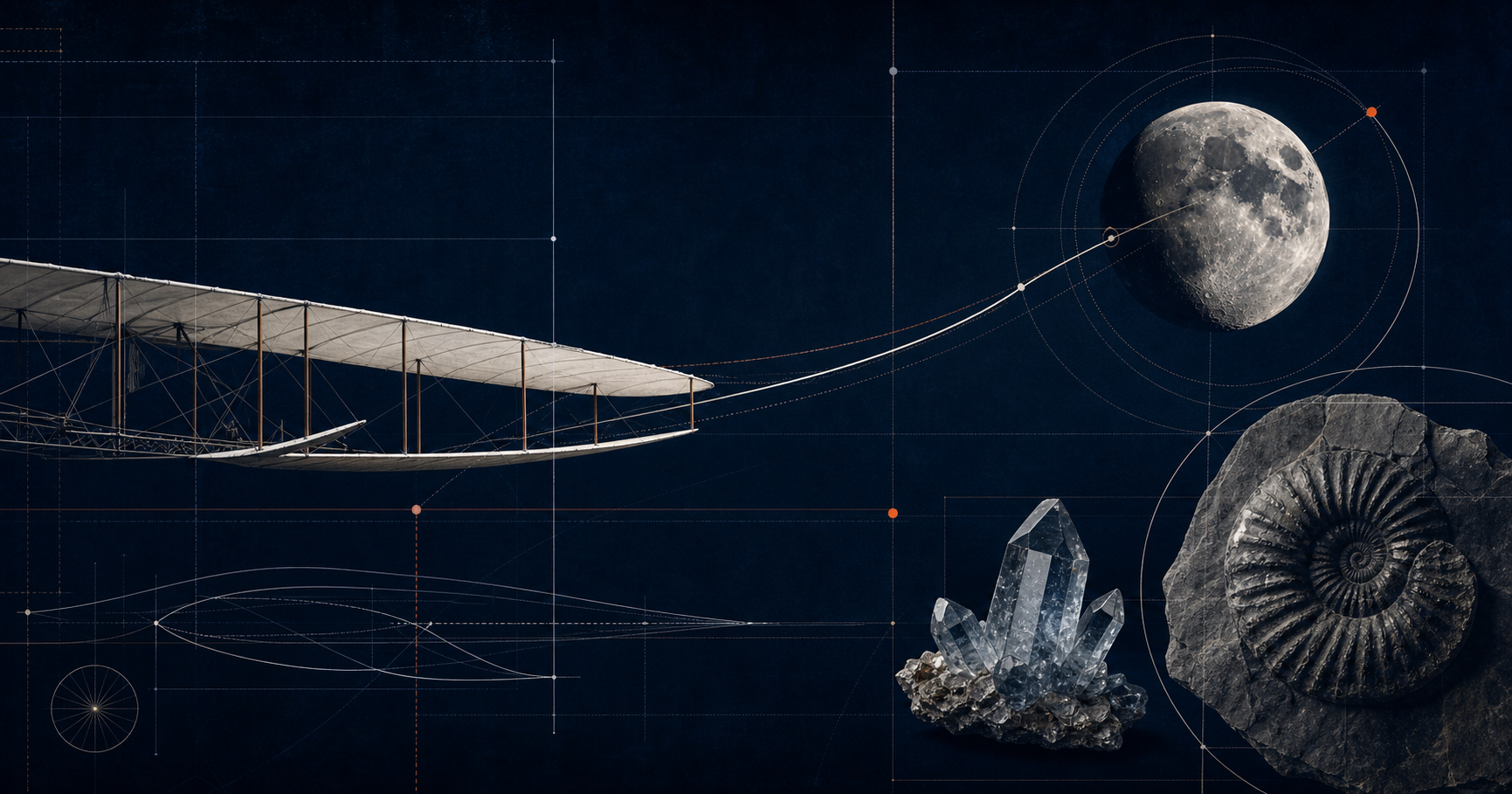 Complete indexExplore all 58Search live experiences and restoration records by subject, place, museum, or collection.Open the collection
 Selected records
Natural History
Art & Culture
Air & Space

Natural History
Historic Places
Research & Collections
Complete index
Filter by subject, museum, or property. Orange map points contain one or more available panoramic experiences; blue points identify other properties in the geographic index.
58 collection records
Art & Culture
Art, neighborhood history, murals, family memory, and 24 oral-history stories across Washington, D.C.’s Chinatown.
Listen to one oral history and identify a place, object, or image that helps support the speaker’s memory.
Historic Places
The Commons, library, crypt, and architectural spaces within the Smithsonian’s first building.
Find two architectural details that reveal different purposes for rooms inside the Castle.

Historic Places
A focused two-room record of working and transitional spaces inside the Castle.
Compare the foyer with the office. What visual clues show the difference between a public and working space?

Art & Culture
Three panoramic views of the circular museum and its modern-art setting on the National Mall.
Notice how the building’s circular form changes sightlines, movement, and the way art is encountered.

Art & Culture
An entrance panorama that records the museum’s curving architecture and National Mall setting.
Look for shapes and materials that make the building feel different from neighboring Mall museums.

Air & Space
The development of commercial air travel, from airmail and early airlines to the passenger experience.
Find one design change that made air travel safer, faster, or available to more people.

Air & Space
Spaceflight, the Moon race, Apollo missions, and the engineering required to reach another world.
Choose one spacecraft system and explain the problem it was designed to solve.

Air & Space
Gliders, balloons, experimental machines, and the questions that shaped the earliest years of flight.
Find two early flying machines and compare how each creates lift or control.

Air & Space
Rocky planets, icy worlds, giant planets, rings, moons, rovers, and the tools used to study the solar system.
Compare two worlds and identify one observation scientists use to explain why they differ.

Air & Space
A look at decisions, technologies, and competing possibilities that shape future work beyond Earth.
Find one proposed space technology and name a scientific, engineering, or human question it raises.

Air & Space
Landmark aircraft, spacecraft, engines, and experiments that changed how people move through air and space.
Choose one milestone and explain what became possible after it succeeded.

Air & Space
How speed changed transportation, technology, competition, communication, and everyday life.
Find one example where greater speed created a new benefit and one new challenge.

Air & Space
Air travel, satellites, communication, and the systems that connect people across distance.
Trace one connection from a machine in the gallery to an everyday activity in your own life.

Air & Space
People, aircraft, and record-setting journeys that expanded the possibilities of aviation.
Select one pioneer and connect a personal decision to a technical or social change in flight.

Air & Space
General aviation, drones, humanitarian flight, sport aviation, homebuilt aircraft, and changing access to the sky.
Find three different purposes for flight and match each purpose to the aircraft best suited to it.

Air & Space
The rapid development of military aircraft, aerial observation, and aviation technology during World War I.
Identify one aircraft feature that changed quickly during the war and explain the need behind that change.
Air & Space
The experiments, wind-tunnel work, design choices, and persistence behind controlled powered flight.
Find evidence of testing and revision. What changed between an early experiment and the Flyer?

Air & Space
A 136-position record spanning the Boeing Aviation Hangar, James S. McDonnell Space Hangar, restoration overlook, aircraft, spacecraft, engines, and collection objects.
Choose one large artifact and one small detail. Explain how the detail helps the larger system perform its intended function.
Air & Space
A preserved immersive record of galleries and artifacts from an earlier chapter in the museum’s history.
Choose one gallery and identify how objects, labels, lighting, and circulation work together to tell its story.

Natural History
A broad immersive record of galleries, collections, research, and public spaces spanning many years of exhibition history.
Choose a gallery and separate three direct observations from the interpretations you make from them.
Natural History
Nine connected views of a hands-on science education space built around investigation and collections.
Find evidence of at least three different ways a scientist can examine or classify an object.
Historic Places
Four exterior views documenting the museum in its National Mall setting and the transition between landscape, civic space, and museum entrance.
Notice the routes, materials, planting, and sightlines. How does the landscape prepare a visitor to enter a national museum?
Research & Collections
Eleven views of exhibit halls, gathering rooms, theater space, and working interiors that reveal the museum as a designed and operated system.
Compare a public gallery with a working room. What changes in circulation, lighting, furniture, access, and purpose?
Natural History
Fossils, changing climates, extinction events, evolutionary relationships, and life across immense spans of time.
Find three forms of evidence used to reconstruct an environment that no human ever observed.

Natural History
A 29-view record of an earlier fossil-hall installation, preserving a previous chapter in museum interpretation.
Compare this historic hall with Deep Time. What changed in how fossils and their environments are presented?
Art & Culture
Eleven gallery views that connect objects, places, histories, and perspectives from across Africa.
Choose one object and list the visual details you would need before making an interpretation.

Natural History
Marine collections, coral reefs, ocean systems, deep-sea life, exploration, and the North Atlantic right whale.
Find one relationship between ocean movement, habitat, and the body form of an organism.

Natural History
Fossils, tools, social life, symbols, reconstructions, and evidence used to study the human past.
Separate one direct observation from one scientific inference in a reconstruction of past humans.

Natural History
Mammals from multiple continents arranged for close comparison of habitat, form, and adaptation.
Compare two mammals from different continents and identify one similar and one different adaptation.
Natural History
The Hope Diamond, precious gems, minerals, rocks, mining, Earth processes, and materials from space.
Choose a gem or mineral and use color, crystal form, luster, and setting to make a careful visual description.
Natural History
Seven views centered on remarkable collection objects and the questions that make them scientifically useful.
Choose the object that surprises you most and write three questions that could begin an investigation.

Natural History
Seven comparative views focused on skeletons, structure, movement, and clues preserved in bone.
Compare two skeletons and infer how the animals move. Point to the bone shapes that support your idea.

Art & Culture
Three preserved views of an Egypt-focused special exhibition and its material evidence.
Select one object and distinguish what you can observe directly from what you still need a source to learn.

Natural History
Nineteen stops connecting raw materials, manufacturing, networks, repair, reuse, recycling, and society.
Trace one material in a phone from its source through manufacture and then to reuse or recycling.

Natural History
Insects, butterflies, and visible examples of relationships among organisms and environments.
Find an insect feature that solves a problem of movement, feeding, defense, or reproduction.
Art & Culture
Four preserved panoramic views of the Out of Africa exhibition.
Choose one display and identify the evidence needed to understand its place, time, and cultural context.
Art & Culture
Five views of an exhibition focused on Cyprus and its cultural and material history.
Find an object whose form suggests how it was used, then check that inference against available interpretation.
Natural History
Three exhibit views introducing DNA, genomes, inheritance, and biological information.
Find a model or graphic that makes invisible biological information visible. Explain what it represents.
Natural History
Two panoramic views centered on Iceland’s landscapes, geology, and environmental evidence.
Find visual evidence of a process that changes Iceland’s surface over time.
Art & Culture
A focused exhibit view about earthen architecture, material knowledge, and building traditions in Mali.
Identify how local material, climate, and skilled labor work together in the architecture.
Natural History
A focused exhibit view connecting geology, mining, safety, and emergency response.
Find one hazard and one piece of equipment or procedure designed to reduce its risk.
Natural History
Five preserved gallery views connecting wildlife, habitat, photographic evidence, and visual storytelling across two exhibitions.
Find two photographs that tell different stories about the same broad subject: life, habitat, or change.

Natural History
Seven views joining two orchid exhibitions with the museum’s Garden Lounge to explore flower structure, pollination, pattern, and botanical display.
Compare two orchid forms and describe how color, symmetry, or structure may help attract a pollinator.
Natural History
Two preserved views focused on soil as a living system, material record, and essential natural resource.
Identify three components of soil and explain how each contributes to a functioning ecosystem.
Natural History
Two preserved exhibition views connecting Earth materials to a wider cosmic history.
Find one object or material whose story began beyond Earth and describe the evidence for that origin.
Natural History
Two views preserving an exhibition about wilderness, landscapes, and environmental observation.
Choose a landscape and list the living and nonliving evidence that defines its ecosystem.
Natural History
Nine views exploring how skeletal evidence can reveal health, work, environment, and lives in the past.
Find one feature of a skeleton and distinguish what it proves from what it only suggests.
Art & Culture
Seven preserved views of objects and interpretation from an earlier Western Cultures exhibition.
Choose one display and identify whose perspective is visible through the objects and labels.

Natural History
Seven immersive exhibition views about pathogens, transmission, public health, and the One Health concept.
Trace one route of transmission and identify a practical action that interrupts it.
Archive recordThis seven-view public-health exhibition is being restored for public access.
Natural History
Fourteen views connecting bird migration, nighttime lighting, the built environment, observation, and preventable collisions.
Identify one feature of the built environment that creates risk and one change that could reduce it.
Art & Culture
Five immersive views about how people understand, shape, remember, and care for places through objects, images, and stories.
Choose one place and identify the natural and cultural evidence that gives it meaning.

Research & Collections
Seven behind-the-scenes views of antler collections and large-scale scientific storage.
Compare two specimens and identify the features a researcher might measure or classify.
Research & Collections
Thirteen views of fluid-preserved specimens and the systems required to maintain research collections.
Identify two environmental conditions that a collection manager must control to preserve specimens.

Research & Collections
Twelve views of whale-bone storage, scale, organization, and comparative research collections.
Find a bone whose shape reveals its function and compare its scale with a familiar object.

Research & Collections
Three additional views of off-site collection storage and the infrastructure behind a national museum.
Look for a labeling, shelving, or movement system and explain why consistency matters.

Natural History
Ten views of a living marine exhibit connecting habitats, organisms, water systems, and field research.
Choose one organism and connect a visible body feature to its habitat or way of feeding.

Research & Collections
Eight views of the Florida research campus, laboratories, field facilities, and marine-science workspaces.
Find three tools or spaces that reveal different stages of field and laboratory research.
Natural History
A mission-based submersible exploration of deep reefs, invasive lionfish, observation, and scientific fieldwork.
Complete one dive mission and separate what you observed from the explanation you infer.
Across the collection
These questions can be used in a single gallery or carried across several subjects, museums, and research collections.
Across the collection
Natural history, air and space, art and culture, historic places, gardens, and research collections can be viewed independently or searched as a single index.
The panoramic view preserves spatial context. Photographs, object notes, maps, media, and current source links explain what appears within it and where the subject continues.
Credits and context
Some experiences document current galleries; others preserve installations that have changed or closed. Dates, exhibition titles, museum names, and source links identify the subject and the moment represented.
Visual Construction is not affiliated with or endorsed by the Smithsonian Institution. The surrounding interface uses no Smithsonian marks. Some original delivered tour files may retain historical project identification. Current visitor information is available through the official visitor maps.