No panorama required

Mission Hall:
text + photos.

This path presents the thirteen principal interpretive stops in document order. It uses semantic headings, descriptive photographs, visible links, keyboard-operable controls, responsive type, high-contrast focus states, and no autoplay.

Historical interpretation only. For current screening rules and traveler services, visit TSA.gov/travel.

Tour contents

  1. TSA Headquarters exterior
  2. Entrance
  3. Entryway art installation
  4. Modality wall art
  5. PATH rails
  6. Cornerstone wall
  7. The Threat, 1979–1994
  8. September 11 memorial and 2001 timeline
  9. The Inception, 2001–2006
  10. Uniforms
  11. The Evolution, 2006–present at time of exhibit
  12. Technology
  13. Leadership portraits

How to use this page: read in order or use the contents links to jump directly to a stop. Each photograph has an alternative description. Essential meaning is stated in the accompanying text; no information requires seeing or operating the image.

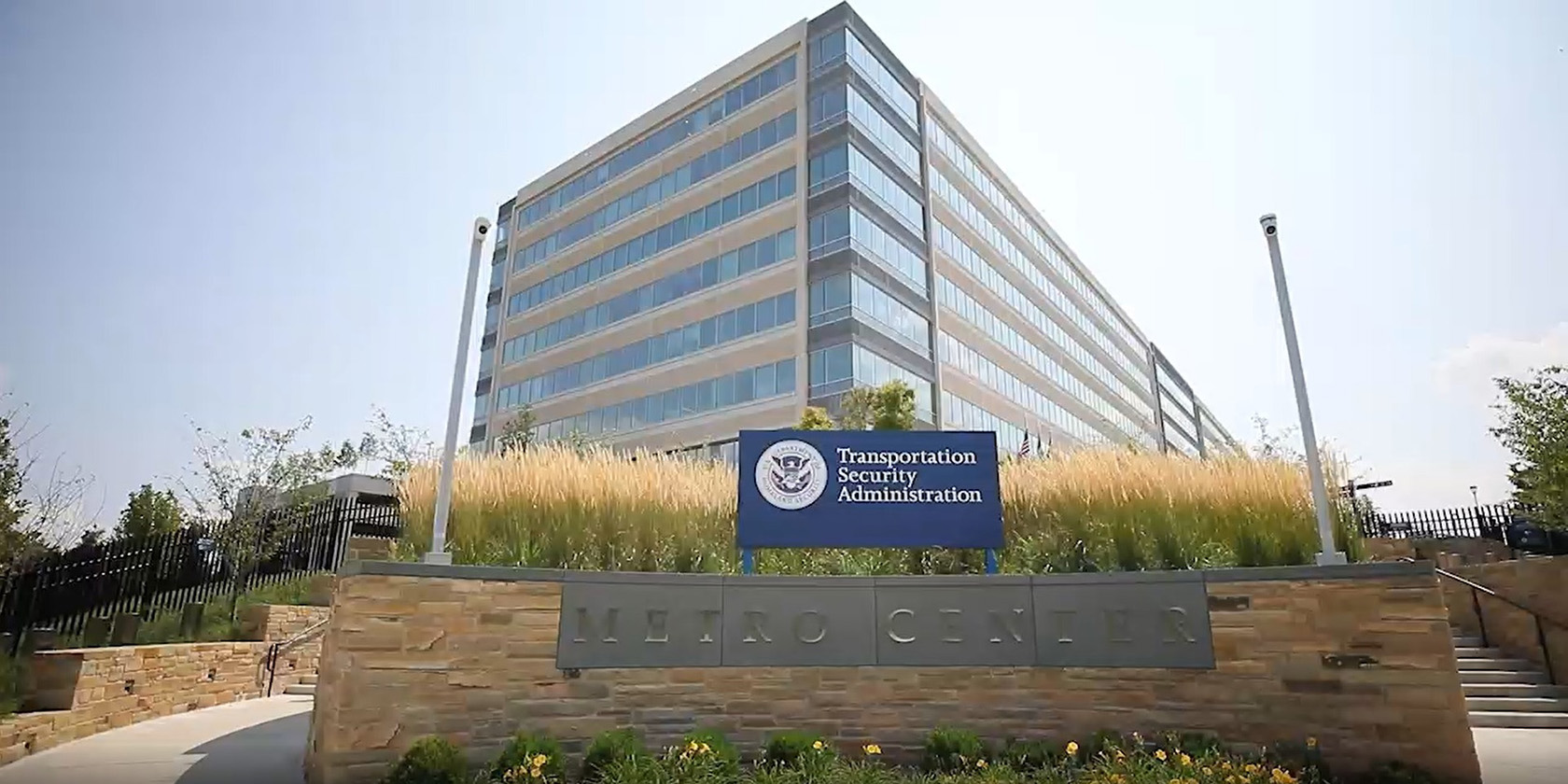
Modern glass-and-stone Transportation Security Administration headquarters viewed from the entrance drive
Stop 01 of 13

TSA Headquarters exterior

The journey begins outside the agency’s Springfield, Virginia headquarters. Mission Hall was created as a permanent internal exhibition and a place where visitors and employees could understand the history behind the organization’s daily work.

Continue to the entrance →

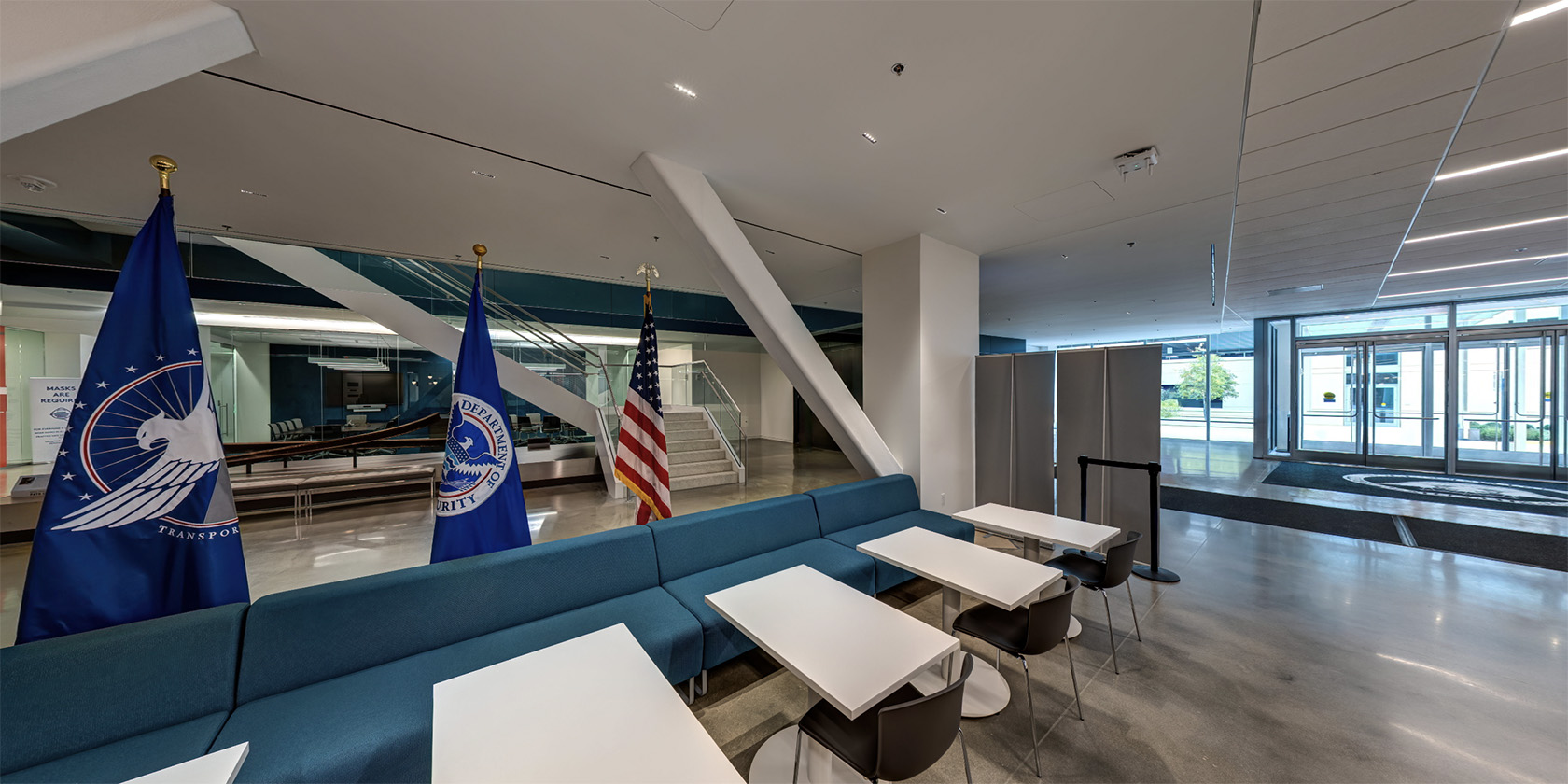
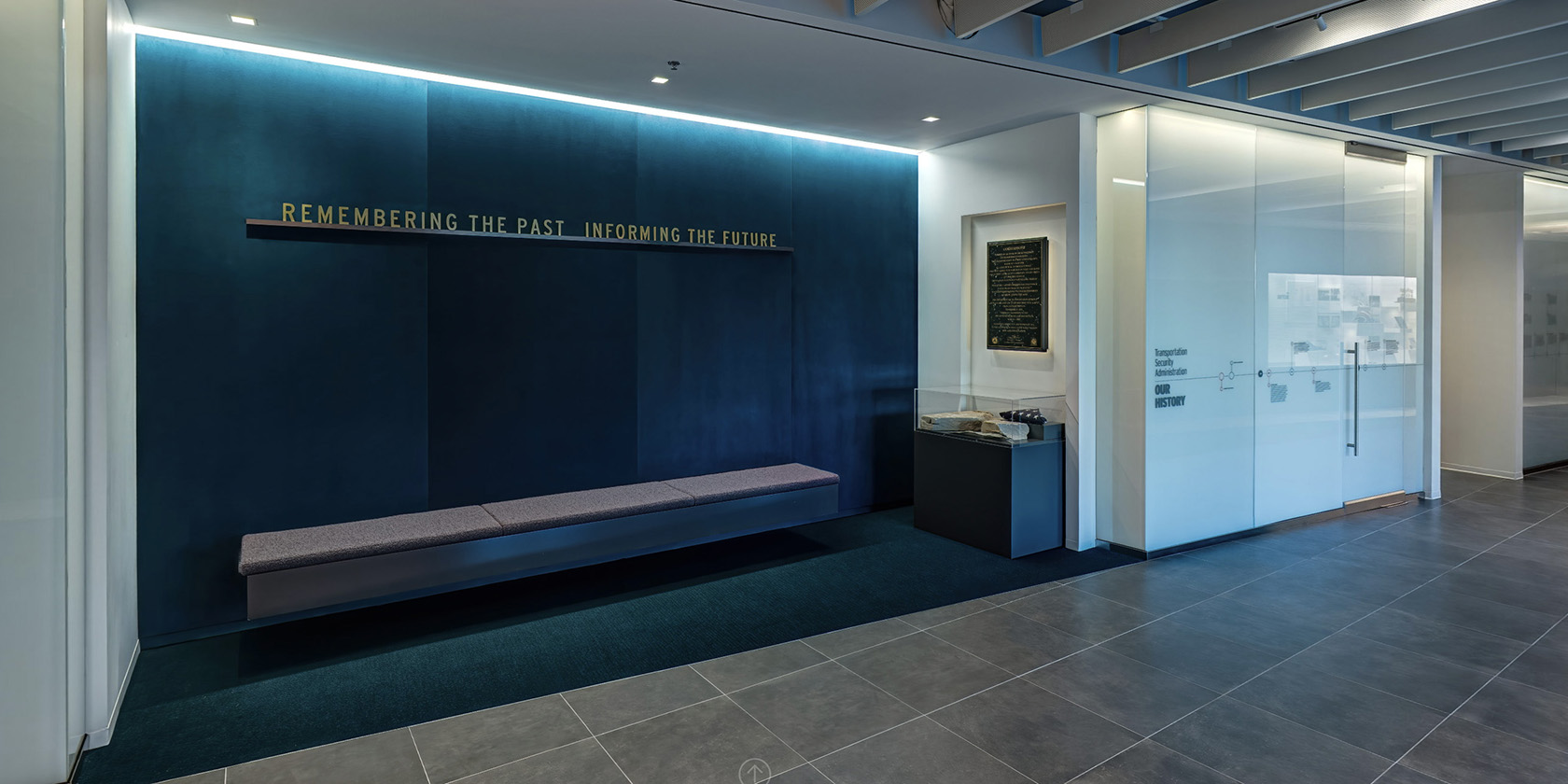
Entrance area leading into Mission Hall with a polished floor, dark exhibit walls, and illuminated displays
Stop 02 of 13

Entrance

The entrance changes scale from a federal office building to an interpretive space. The exhibition title—Remembering the Past, Informing the Future—states its purpose: institutional memory should shape present judgment rather than remain a static collection.

Continue to the entry artwork →

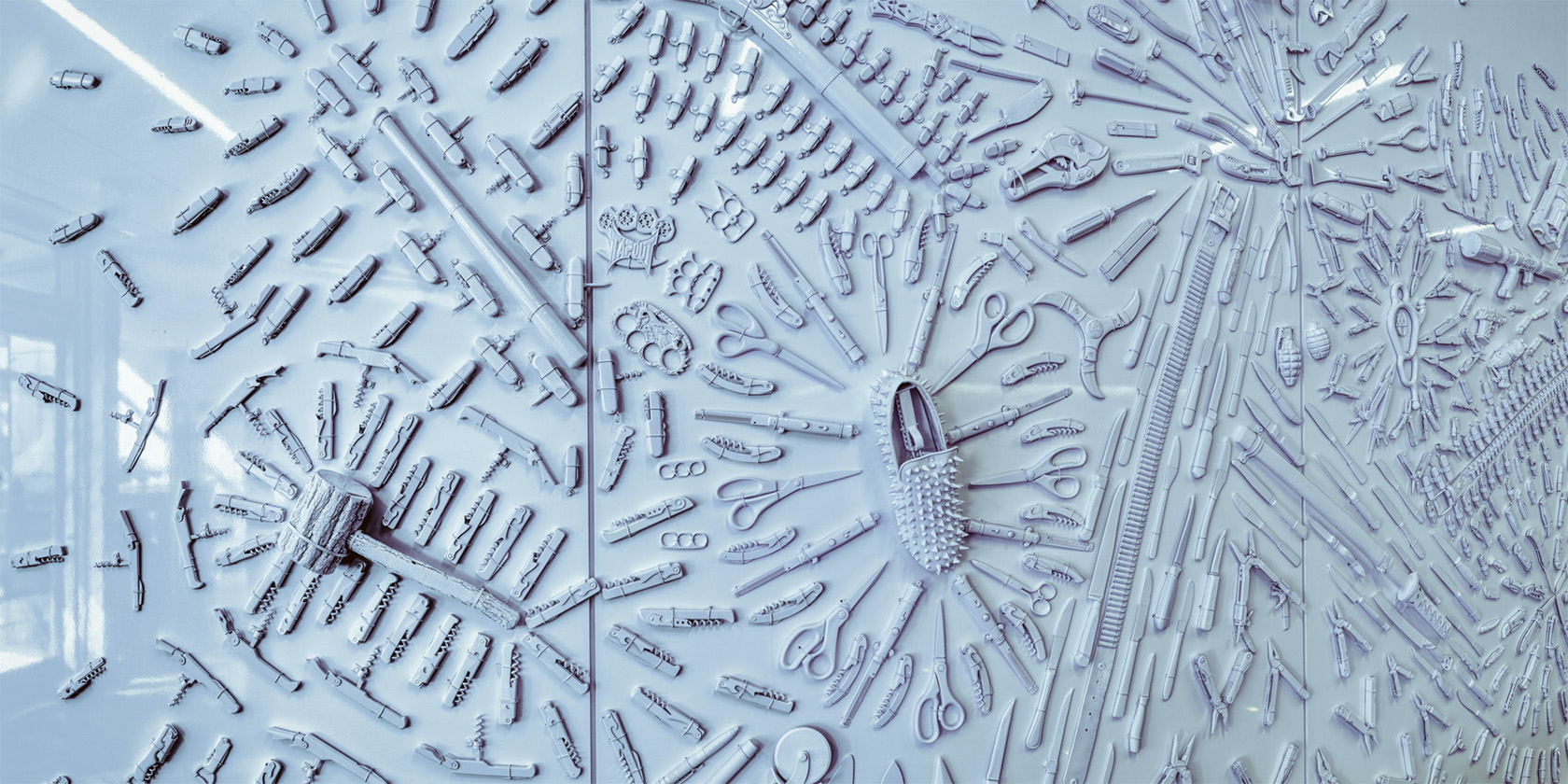
Entry gallery featuring suspended and wall-mounted artwork at the beginning of the exhibition
Stop 03 of 13

Entryway art installation

The opening artwork introduces a recurring idea: many individual people and objects form a larger protective network. Mission Hall uses art, badges, uniforms, artifacts, photographs, documents, and films to explain an institution that cannot be understood through equipment alone.

Browse the film collection · Continue to the modality wall →

A large graphic wall installation depicting aircraft, trains, roads, maritime shipping, and other forms of transportation
Stop 04 of 13

Modality wall art

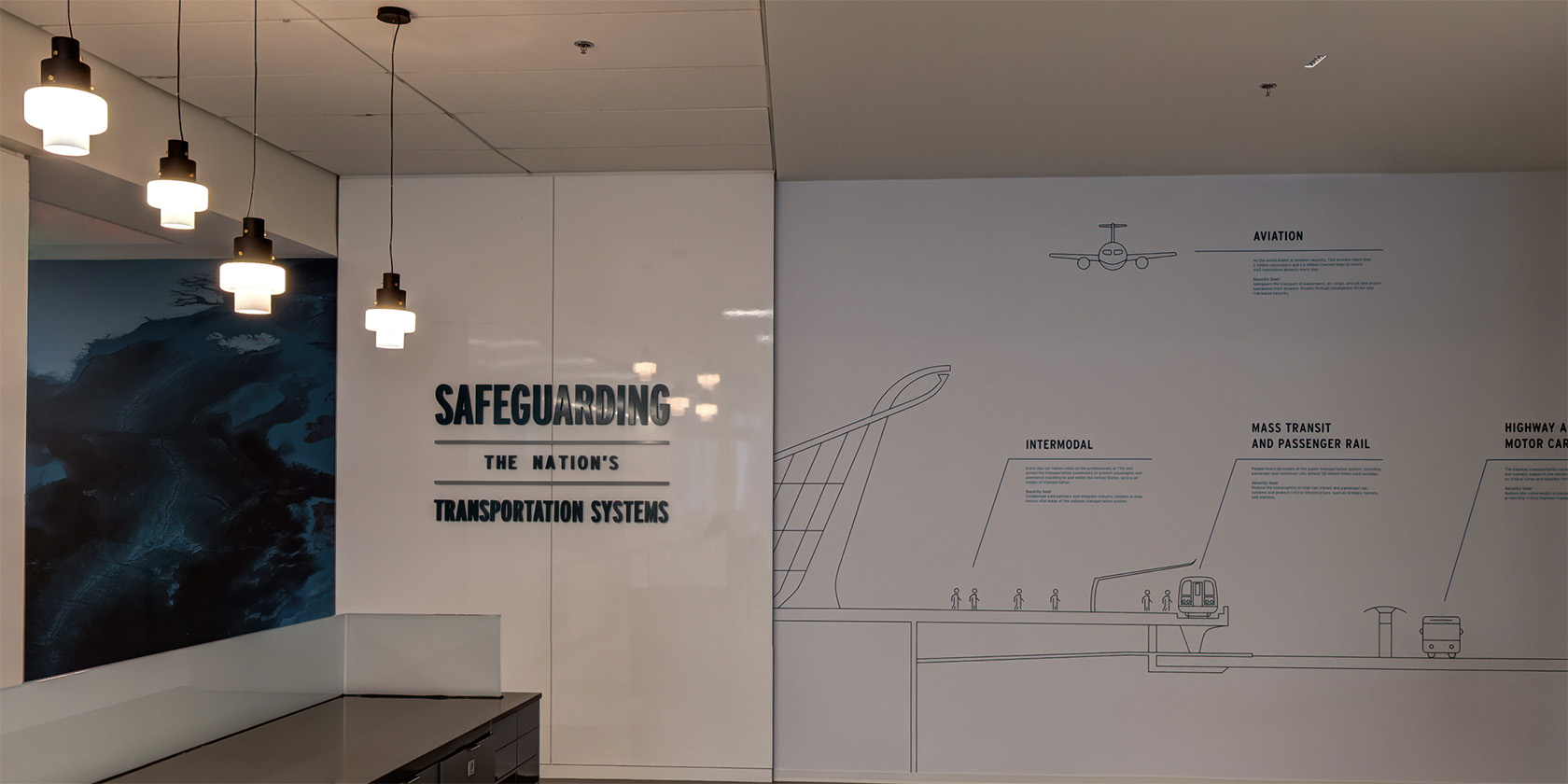
The wall broadens the story beyond airports. TSA’s security responsibilities extend across aviation, mass transit and passenger rail, highways and motor carriers, freight rail, pipelines, and maritime transportation. Each operates differently and depends on different combinations of regulation, partnership, inspection, intelligence, technology, and local response.

Read the transportation-network story · Open the original modes viewer

Parallel metal rails forming an architectural path through the exhibition
Stop 05 of 13

PATH rails

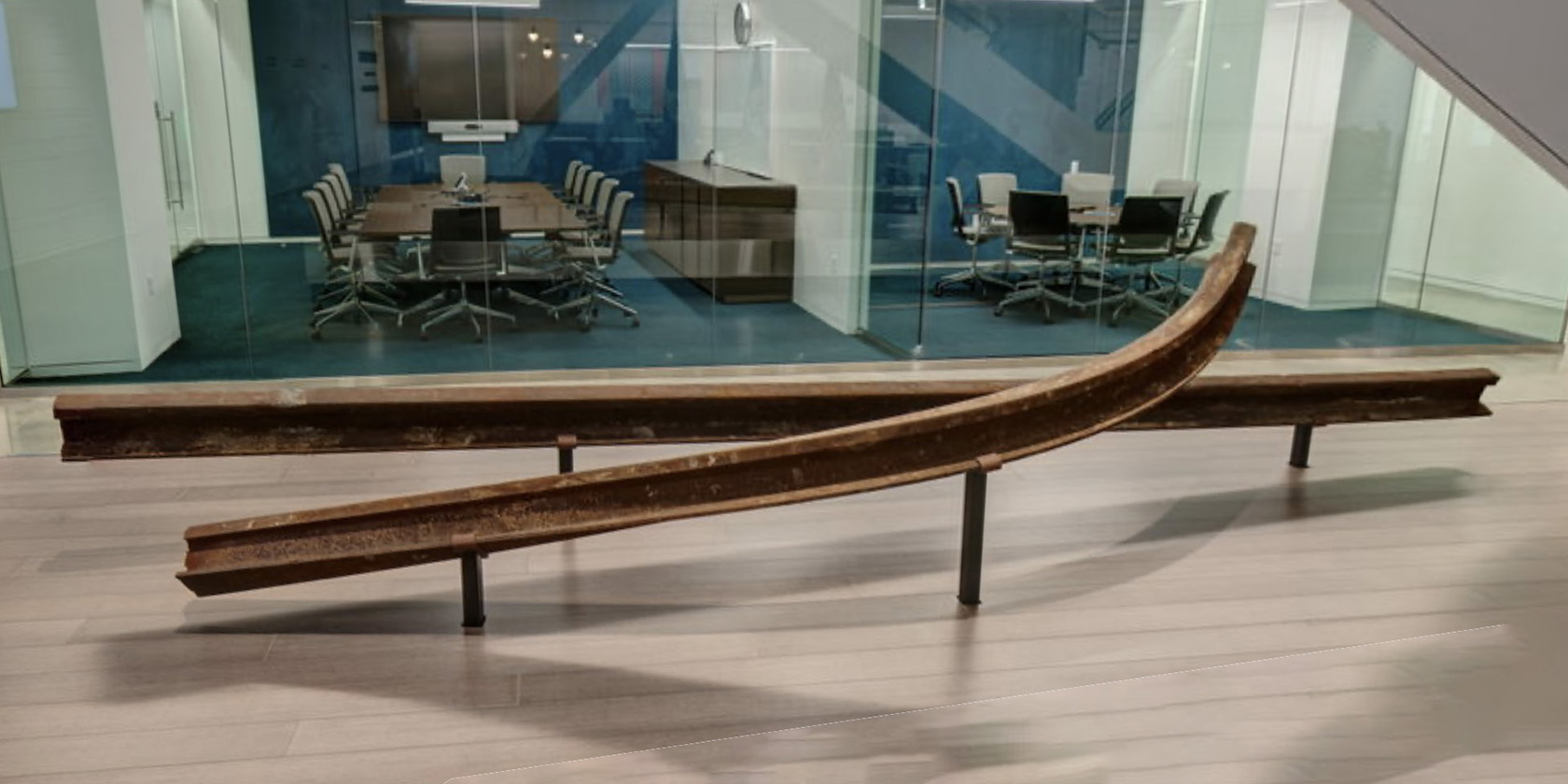
Parallel rails guide visitors physically and chronologically. Their linear form evokes tracks, routes, timelines, and the interconnected systems through which people and commerce move. The exhibition’s architecture turns institutional history into a path that can be followed.

Continue to the cornerstone wall →

Cornerstone wall displaying a mission statement and a field of badges
Stop 06 of 13

Cornerstone wall

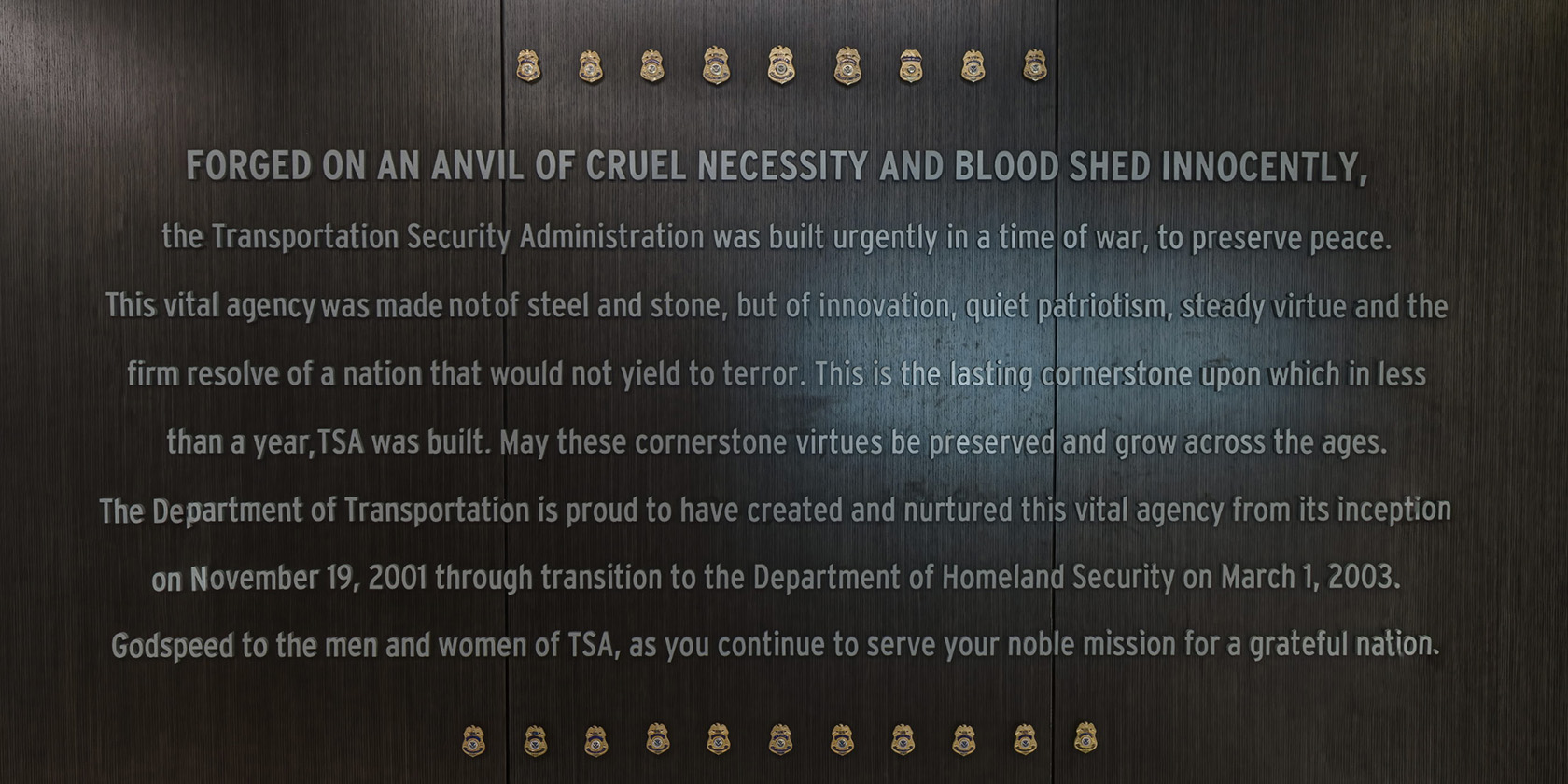
The cornerstone joins mission and workforce. Twenty badges represent responsibilities across screening, inspection, law enforcement, investigation, leadership, canine operations, explosives expertise, and partnership. The visual message is deliberate: transportation security is distributed among specialists whose work must connect.

Read about the people and roles · Inspect all twenty badges

Dark exhibit case labeled The Threat, containing documents, photographs, and historical security artifacts
Stop 07 of 13

The Threat, 1979–1994

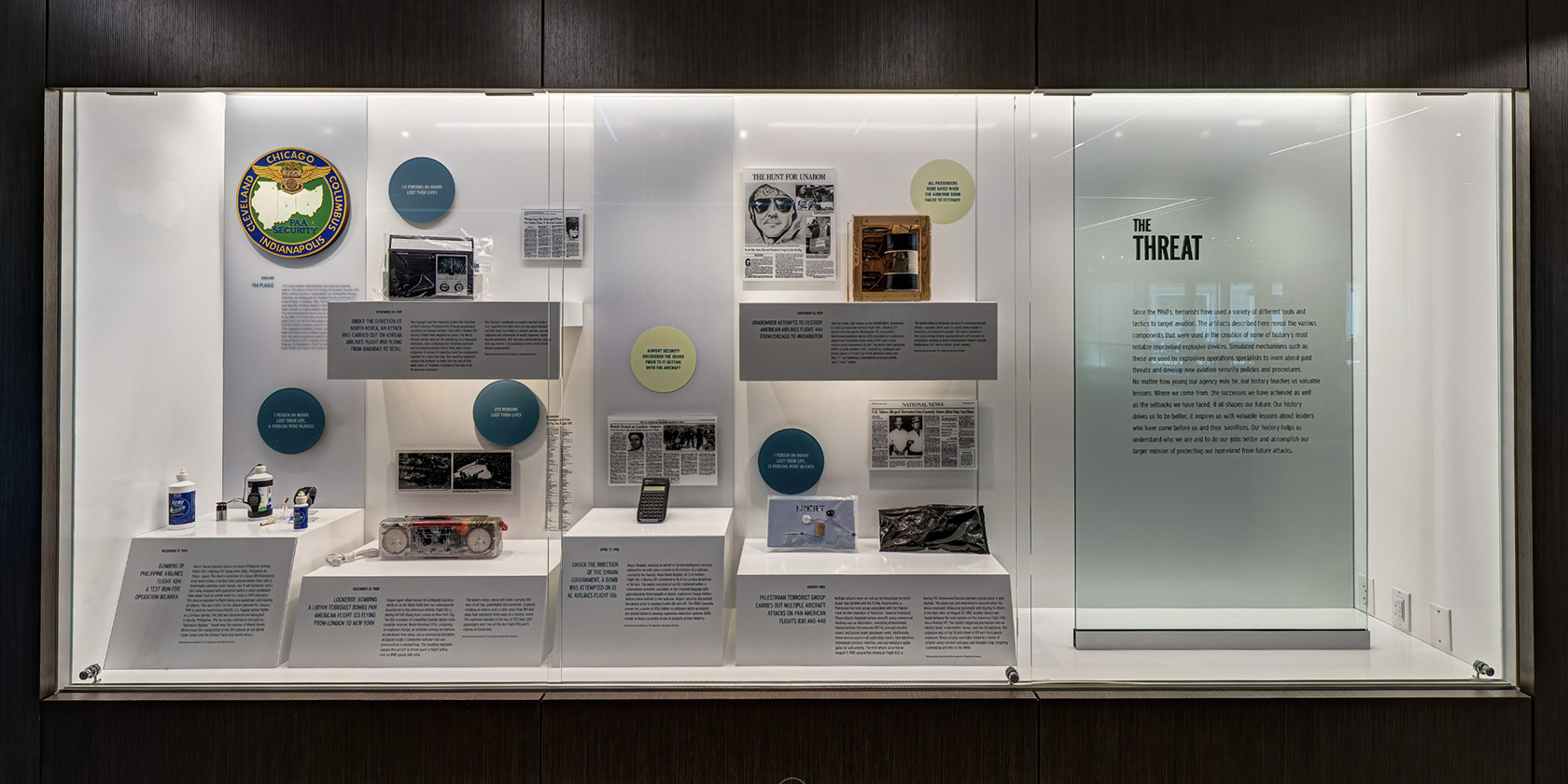
This case establishes the longer history before TSA. A central record is the FBI’s UNABOM investigation into a serial bombing campaign that targeted universities and airlines from 1978 to 1995. Three people were killed and nearly two dozen injured. In 1979, a bomb placed on American Airlines Flight 444 forced an emergency landing after failing to detonate as intended.

The case is presented to explain institutional learning—not to glorify the perpetrator. Read the FBI’s case history or continue through the selected timeline.

September 11 memorial and 2001 timeline with photographs and text panels
Stop 08 of 13

September 11 memorial and 2001 timeline

The September 11 attacks killed nearly 3,000 people and used four hijacked commercial aircraft as weapons. This stop remembers the victims and traces the rapid national response. On November 19, 2001, the Aviation and Transportation Security Act established TSA and federalized passenger screening.

The memorial is the moral center of the exhibition. The history that follows is not a story of machinery; it is a public obligation created by loss. Continue with 9/11 Memorial educational resources.

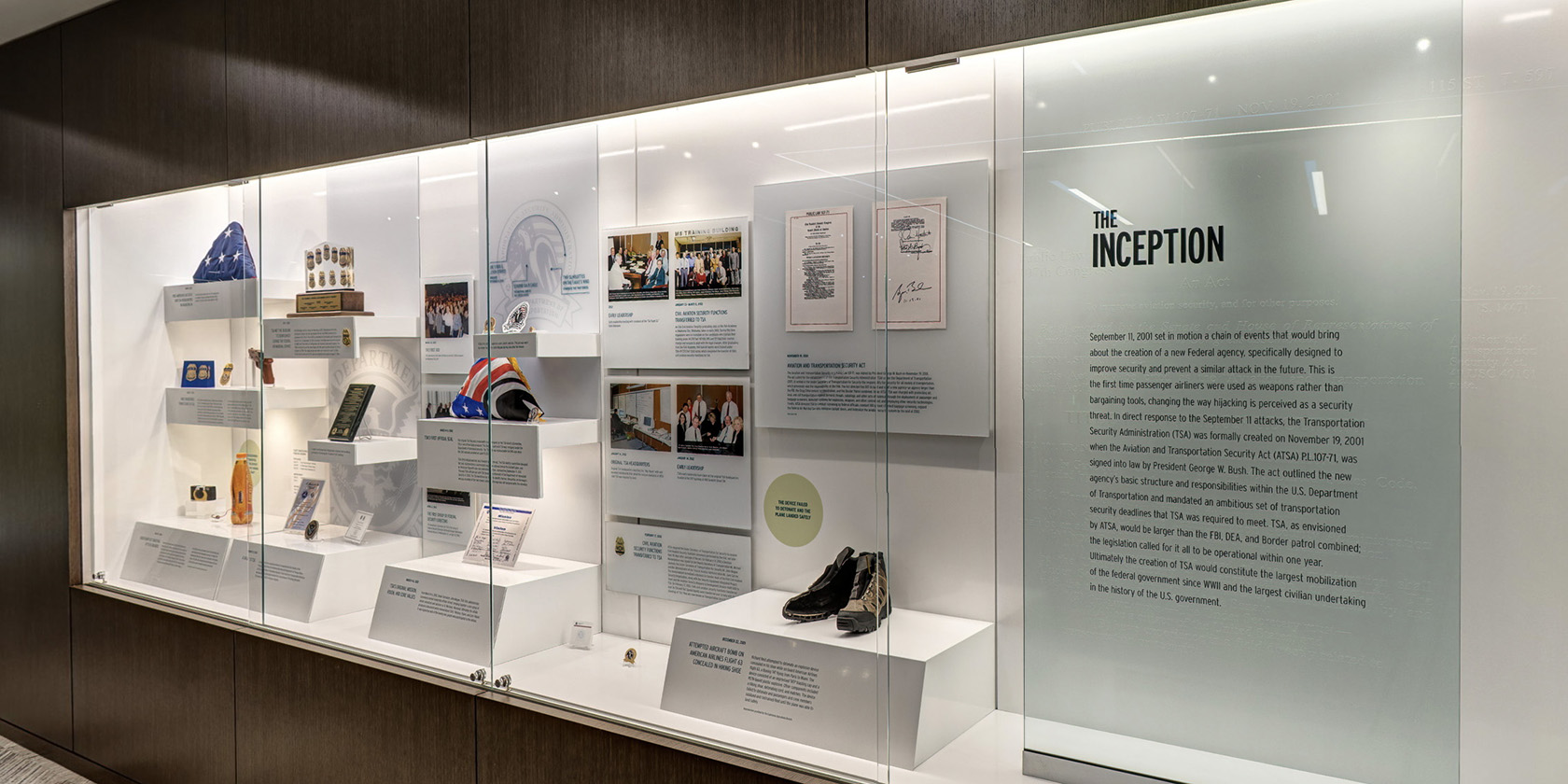
Exhibit case labeled The Inception, containing early TSA objects, photographs, and timeline material
Stop 09 of 13

The Inception, 2001–2006

TSA began with roughly one hundred people and an urgent statutory schedule. Within its first year it recruited, trained, equipped, and deployed a national screening workforce; assumed passenger screening responsibilities at hundreds of airports; and implemented checked-baggage screening requirements. In 2003, it transferred into the newly created Department of Homeland Security.

The formative years also included the Federal Flight Deck Officer program, the Freedom Center, bomb-appraisal capability, canine expansion, cargo programs, and the development of consistent uniforms and professional roles. Inspect the original case.

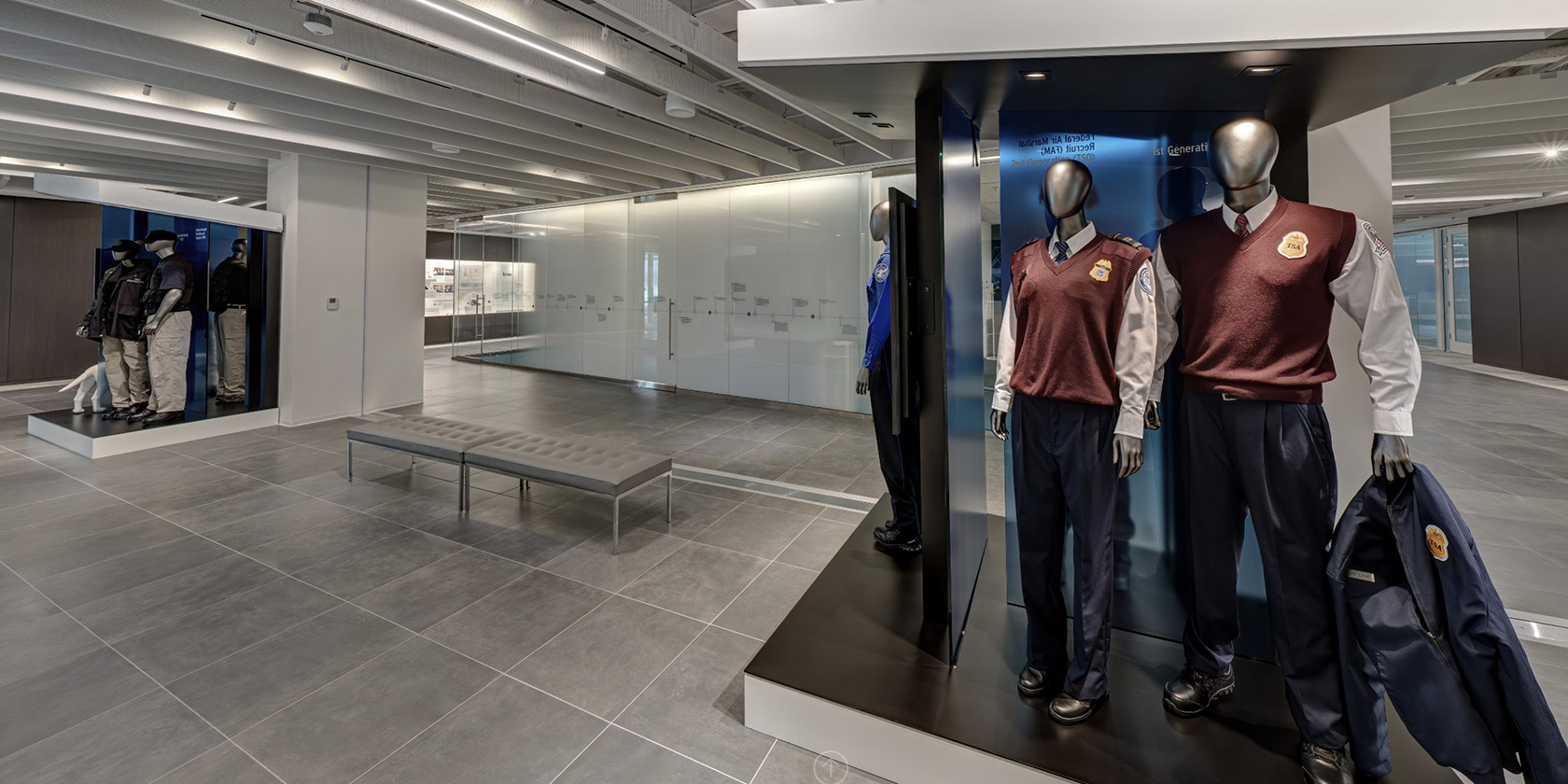
Gallery displaying eight uniforms beside a long institutional timeline
Stop 10 of 13

TSA uniforms

Eight uniform records show screening officers across three generations, a federal air marshal recruit, canine handler, transportation security inspector, visible intermodal response team member, and explosives specialist. Materials, color, badges, equipment, and silhouette communicate function and organizational identity.

The most visible change is the move from early white shirts to the royal-blue third-generation TSO uniform and uniquely numbered metal badge. Read the uniform stories or open the detailed uniform viewer.

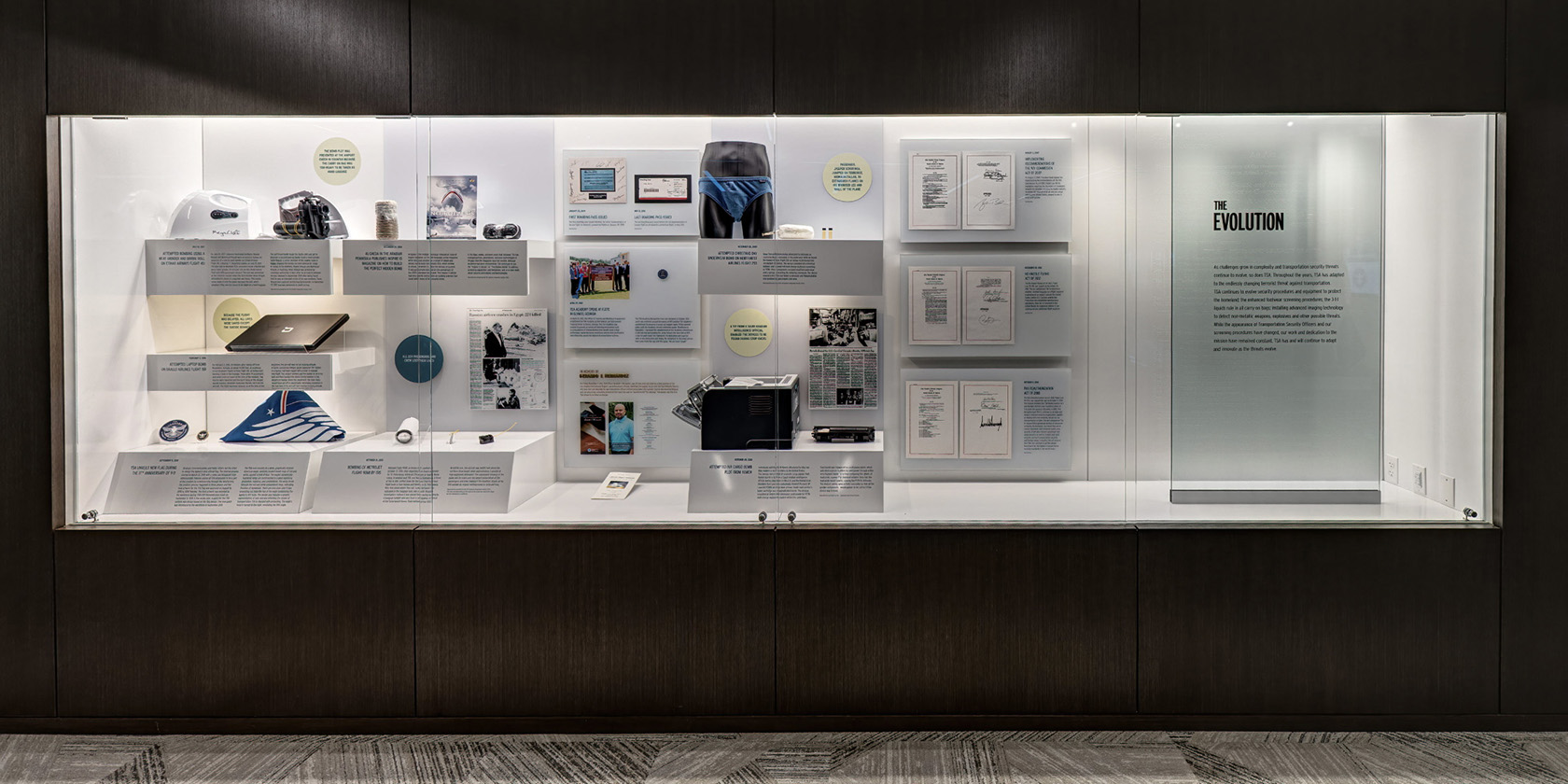
Evolution gallery showing the later development of TSA programs and procedures
Stop 11 of 13

The Evolution, 2006–present at time of exhibit

The later timeline follows a pattern of adaptation. The disrupted 2006 transatlantic liquid-explosives plot led to emergency restrictions and the later 3-1-1 rule. A 2009 attempted attack accelerated work in intelligence coordination and screening technology. Risk-based programs, passenger assistance, social communication, canines, computed-tomography systems, biometrics research, and cybersecurity planning became part of the expanding record.

Because this is an archive, “present” means the period in which Mission Hall was completed. Open the searchable high-resolution timeline.

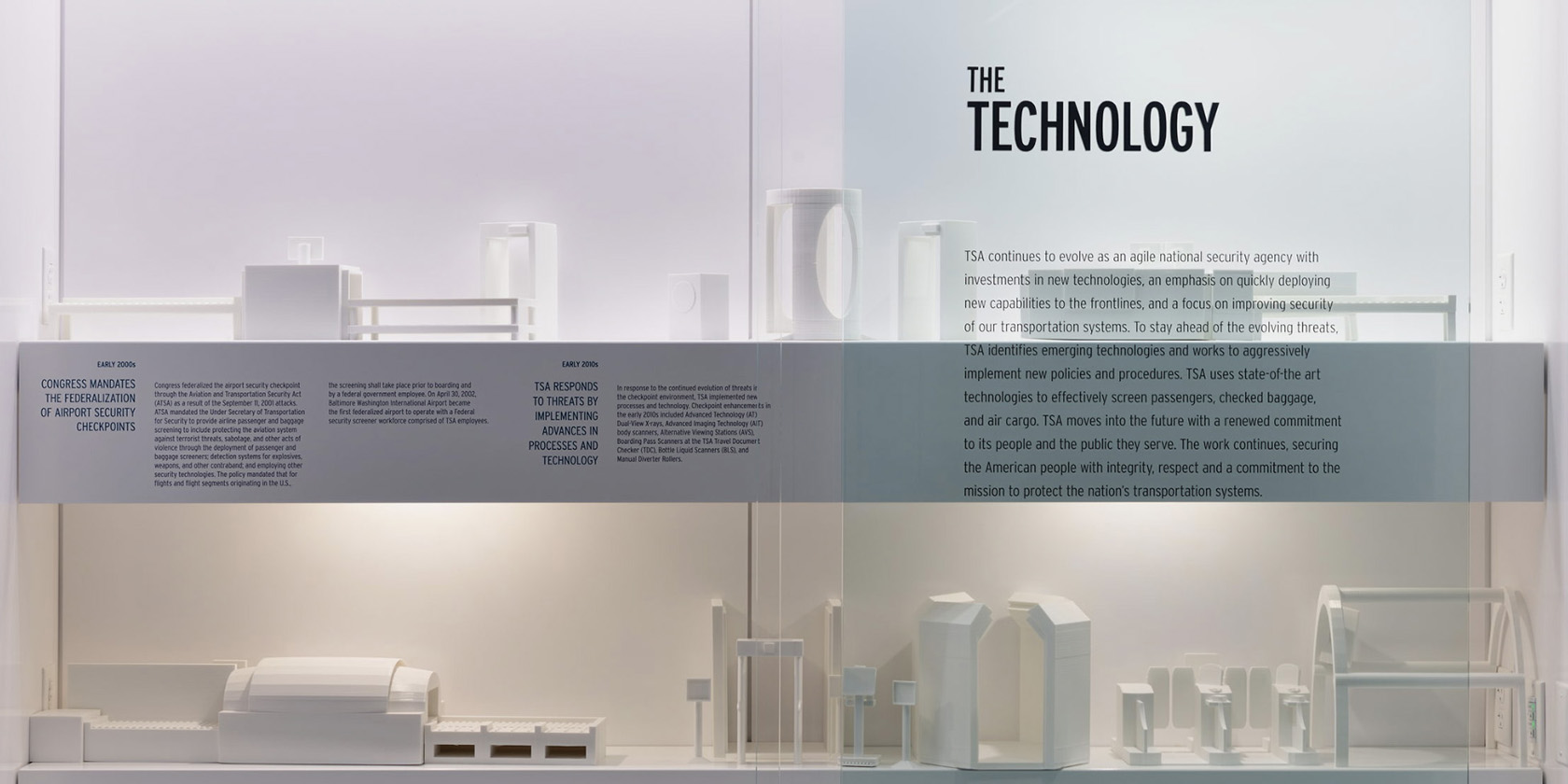
Technology gallery with historical screening equipment and illuminated interpretation panels
Stop 12 of 13

Technology

Screening technology is part of a larger chain: a threat and requirement must be understood; a tool must be designed, tested, purchased, deployed, maintained, and used by trained people; results must be evaluated; and the system must continue working at transportation scale.

The objects show change, but the deeper subject is capability. No device replaces judgment, process, intelligence, or public cooperation. Read the network and technology story or inspect the technology case.

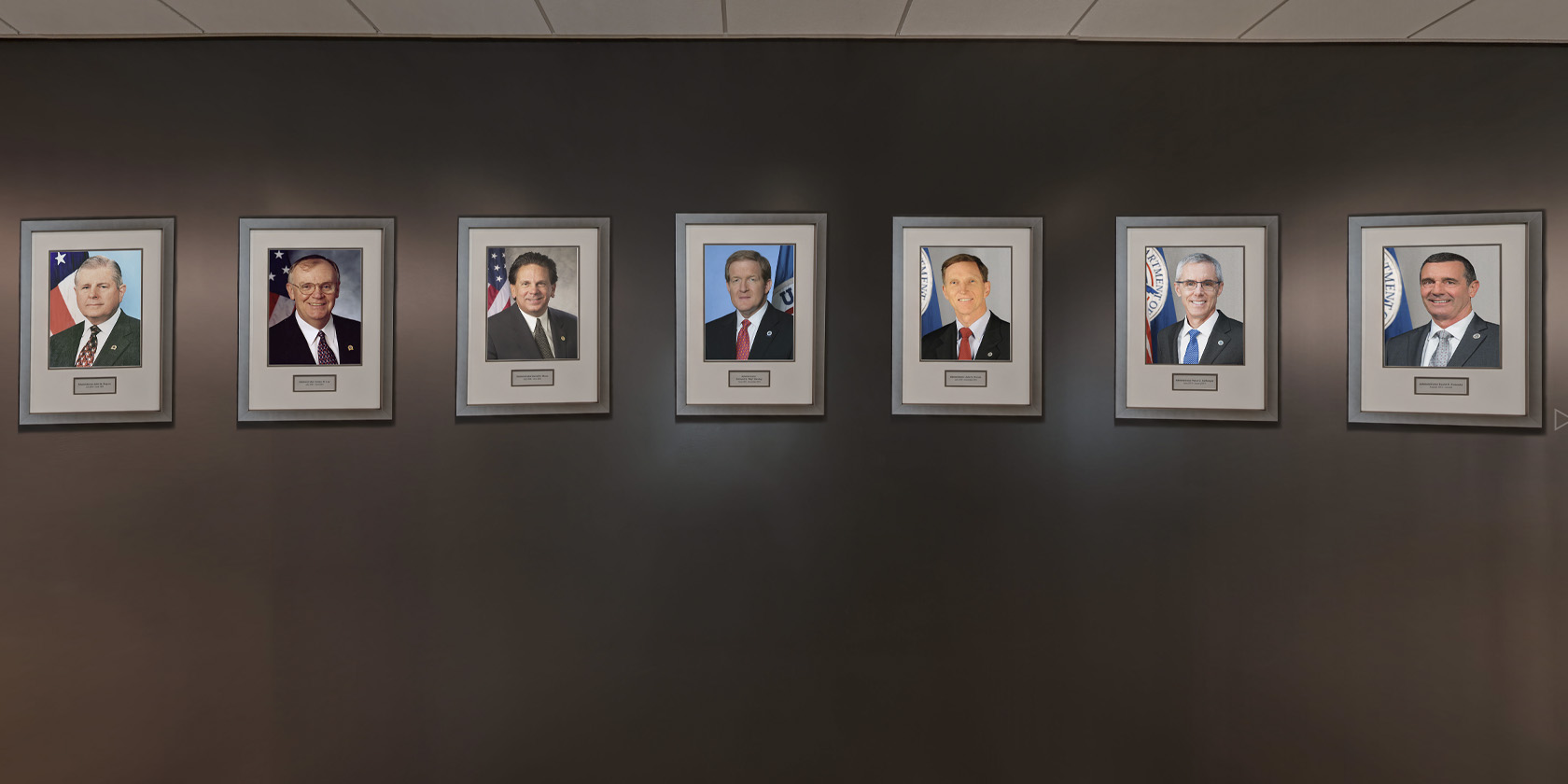
Formal portraits of Transportation Security Administration leaders arranged along a gallery wall
Stop 13 of 13

Leadership portraits

The portrait wall records the administrators who led TSA through different periods of formation, crisis, expansion, and change. Leadership matters, but Mission Hall’s larger record makes clear that an institution is sustained by the daily work of its full workforce and its partners.

The archived portraits should not be read as a current leadership roster. Use TSA.gov for current leadership information.

End of the text + photo tour

Continue in the format that works for you.

The same core story is available as a visual panorama, a dated history, an object-and-uniform collection, a transportation-network explainer, and a film archive.

Accessibility statement for this reconstruction

This readable route replaces the incomplete legacy “508” launch that depended on an external service. The new pages use structural headings, meaningful link text, keyboard-operable navigation and film dialogs, visible focus states, responsive layouts, descriptive alternative text, reduced-motion support, and no automatic audio or video.

The preserved panoramic and object viewers are historical software and may not expose every function equally to every assistive technology. Essential historical content is therefore presented independently in the pages of this site. If the Vimeo source player does not provide a verified caption or transcript for a preserved film, its adjacent written summary provides context without requiring playback.

Current official accessibility support and traveler assistance are available through TSA Cares.