Behind each familiar procedure is a particular history. This timeline follows those turning points without turning human tragedy into spectacle.
Historical context only. For current requirements, prohibited items, and traveler services, use TSA’s current travel site.
Before TSA
A threat landscape formed over decades.
Transportation security did not begin in 2001. Earlier bombings, hijackings, investigations, and changes to aviation law established a difficult body of experience—while responsibility remained divided among airlines, airports, law enforcement, and federal agencies.
Case file · 1978–1995
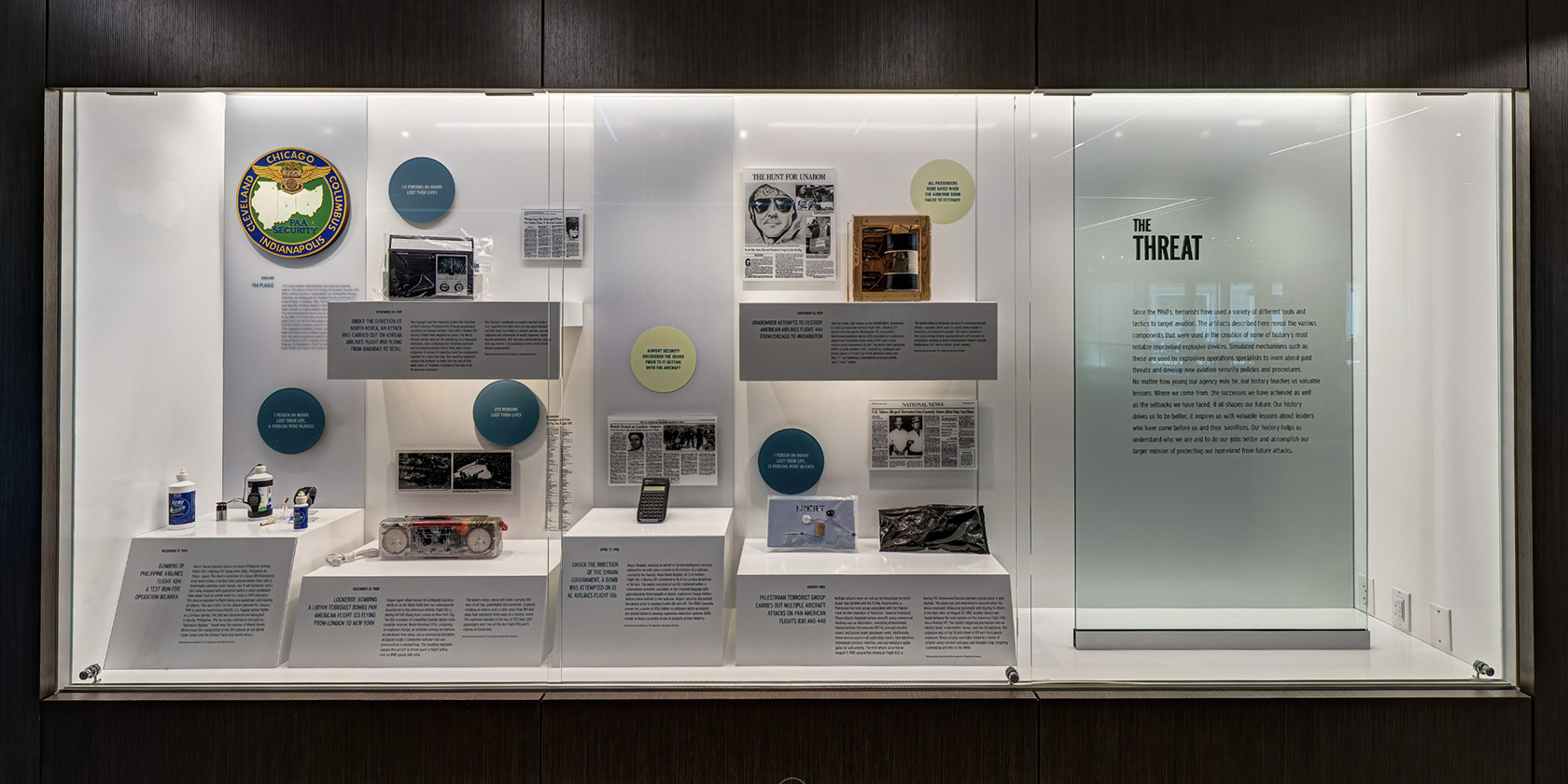
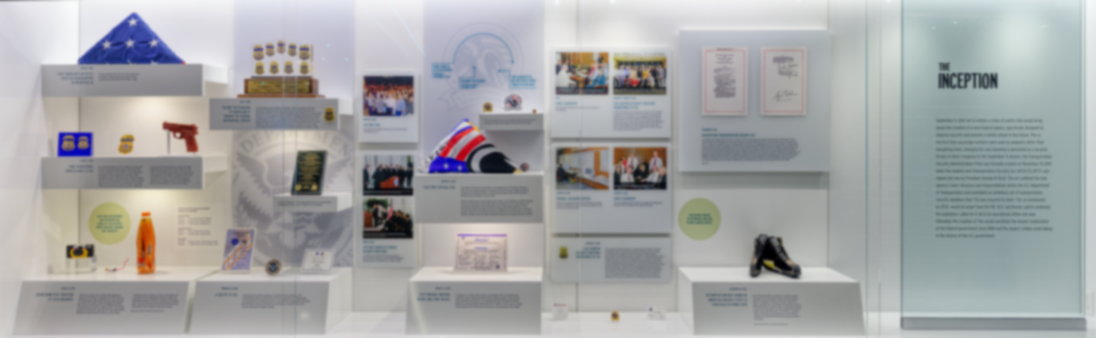
The UNABOM investigation
A serial bomber targeted universities and airlines over seventeen years. The FBI-led investigation took its name from “university and airline bombing.” Three people were killed and nearly two dozen injured. A bomb placed aboard American Airlines Flight 444 in 1979 failed to detonate as intended but forced an emergency landing.
The attacks killed nearly 3,000 people. Four commercial aircraft were hijacked; the consequences transformed aviation, national security, emergency response, and public life. The Mission Hall record centers this moment as a responsibility to remember and learn.
Congress passed the Aviation and Transportation Security Act on November 19, 2001. It created TSA, federalized passenger screening, and gave the new agency security responsibilities across transportation modes.
Built quickly. Tested repeatedly. Changed continuously.
The full archived timeline contains more than one hundred entries. These selected events explain the broad arc without reproducing operational detail that is unnecessary for public understanding.
The Aviation and Transportation Security Act
The law formally establishes TSA and assigns federal responsibility for civil aviation screening and broader transportation security.
Attempted shoe bombing
Passengers and crew stop an attempt to ignite explosives hidden in a shoe aboard a transatlantic flight. The event becomes an early test of the still-forming agency and contributes to later screening changes.
The first 300
An initial group of federal screeners begins the work of building a national organization—recruiting, training, equipping, and deploying a workforce at an extraordinary pace.
Federal passenger screening deadline
TSA meets the statutory deadline to assume passenger screening responsibilities at commercial airports across the country.
Transfer to the Department of Homeland Security
TSA moves from the Department of Transportation into the newly established Department of Homeland Security.
Transatlantic liquid explosives plot
Authorities disrupt a plot involving flights from the United Kingdom to North America. Emergency restrictions are introduced; the later 3-1-1 liquids rule gives travelers a consistent standard.
Attempted attack on Flight 253
Passengers and crew respond to an attempted attack on a flight approaching Detroit. The event accelerates changes in intelligence coordination and screening technology.
TSA PreCheck begins
Risk-based screening starts to distinguish known, lower-risk travelers, shifting some attention and resources toward unknown or higher-risk situations.
A pandemic tests transportation
COVID-19 changes passenger volume, workforce practices, checkpoint procedures, and the relationship between public health and movement.
People, intelligence, partnerships, law, design, technology, inspection, training, and public cooperation reinforce one another. The history of TSA is the history of building those layers while preserving movement at enormous scale.